Reference
Aquafaba meringue without cream of tartar
Yes: in our meringue recipe, the 2g of cream of tartar is optional, and 1g of citric acid can take the same role in supporting the foam.
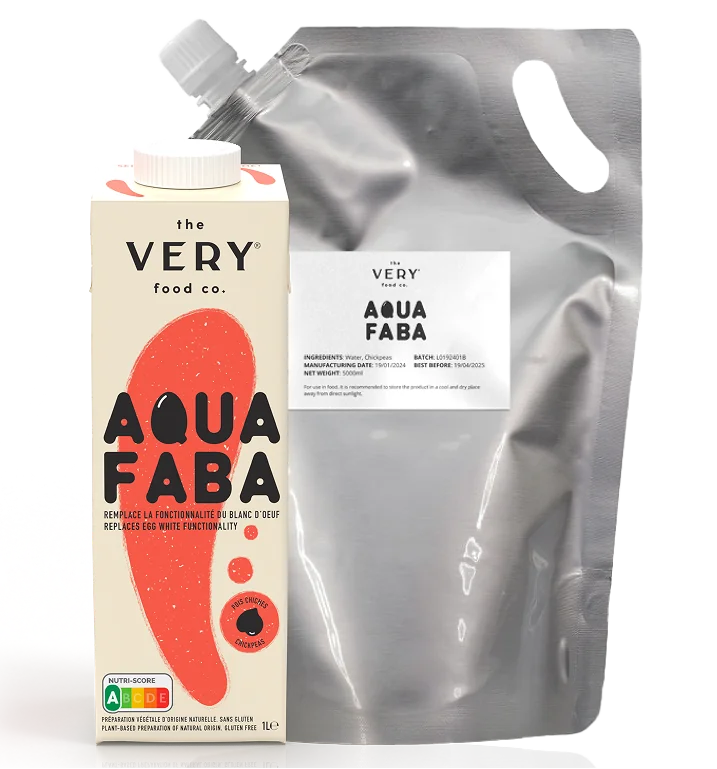
When the tin of cream of tartar is not in the cupboard, you can still make meringues with a steady method. VERY AQUAFABA gives you ready-made, filtered and standardised chickpea cooking water, so you can start from a measured format rather than homemade liquid or a can. A 1L Tetrapak replaces 33 egg whites, which leaves enough liquid for more than one bake. Chill the aquafaba to 4 °C before whipping. Use a clean, grease-free bowl, add sugar slowly, and bake the meringues until dry. This guide shows where citric acid fits, what supports the foam without either acid, and how to make your first batch.
Updated: .
Do you need cream of tartar at all?
Cream of tartar is optional in the recipe, not a condition for starting. For a small batch, you use 150g of chilled aquafaba, equal to 5 egg whites, with 150g of caster sugar. That mixture makes about 30 small meringues when you follow the full method.
If cream of tartar is in your cupboard, the recipe gives 2g as an optional support for foam stability. If it is not, leave it out and give attention to temperature, the bowl and the sugar stage instead. Work from the method you have, rather than delaying a batch for one optional ingredient.
Citric acid instead
Citric acid is the stated alternative when you have no cream of tartar. The recipe uses 1g of citric acid as an optional aid to foam stability, compared with 2g of cream of tartar. You do not need to change the aquafaba or sugar quantities for that choice.
Keep the rest of the sequence consistent. Chill your liquid, whip it to soft peaks, then introduce caster sugar gradually. Citric acid is an option, not a substitute for a clean bowl or sugar that has dissolved. If neither acid is available, use the same controlled process and check the foam at each stage.
What keeps the foam up without either
Without cream of tartar or citric acid, the foam relies on temperature, a clean bowl and gradual sugar. Start with aquafaba chilled to 4 °C and a clean, grease-free bowl. Whip on high speed to soft peaks, which takes about 3 to 5 minutes in the recipe.
Move to medium speed when you add the caster sugar. Add it 1 tablespoon at a time and let each addition dissolve before the next. Then continue whipping until the foam is glossy and reaches stiff peaks. Sugar needs time to dissolve, which is why adding it slowly belongs in the method.
Make your first batch
For your first batch, measure 150g of chilled aquafaba, equal to 5 egg whites, and 150g of caster sugar. This quantity makes about 30 small meringues. You can make it without either optional acid.
- Whip the aquafaba on high speed to soft peaks.
- Add the sugar 1 tablespoon at a time on medium speed, allowing each addition to dissolve.
- Whip until the foam is glossy and reaches stiff peaks.
- Pipe rounds measuring 3 to 4 cm.
- Bake at 90 °C with the fan off for 1.5 to 2 hours, until completely dry.
- Cool the meringues on the tray.
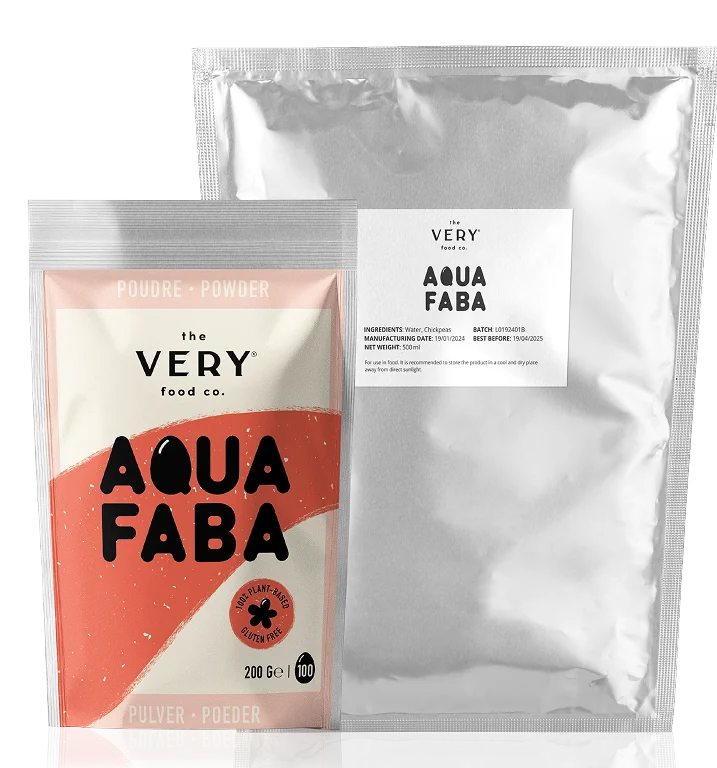
When you are ready to bake, choose a home-kitchen format before you set out the bowl and sugar. The 1L Tetrapak replaces 33 egg whites, and the 200g pouch replaces 100 egg whites. Online, Amazon carries both formats in the United States, Germany and Austria, InstantChef in France, Siradis in Switzerland and Qualifirst in Canada. Anywhere else, send an enquiry through the contact form.
Where to buy VERY AQUAFABA