Powder and formats
How far does a 200g pouch of aquafaba powder go?
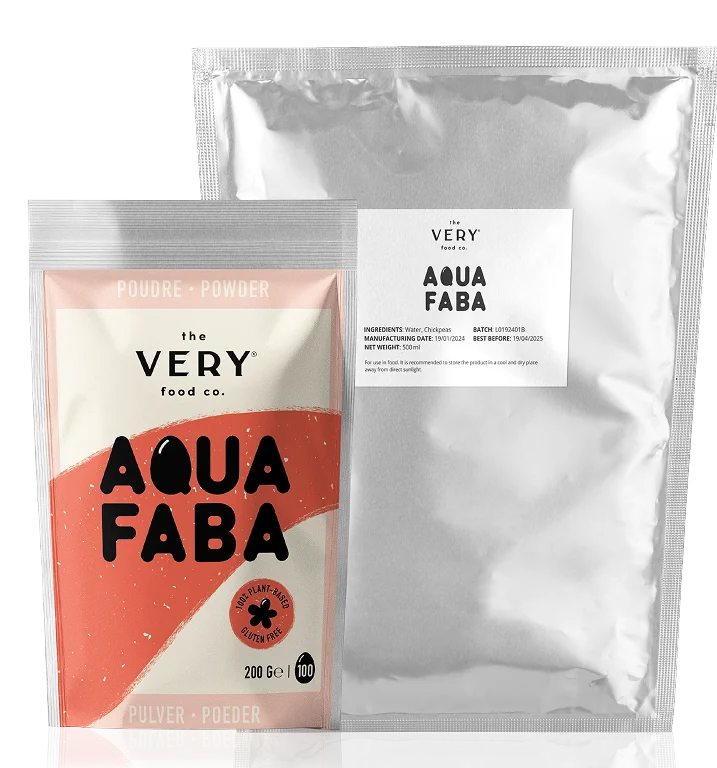
A 200g pouch of VERY AQUAFABA powder replaces 100 egg whites. What that looks like across the recipes you already make is the number to work from. A pastry section might use some for meringue, some for macarons and leave the rest for another production day; a bar draws from the same pouch more slowly. Because the powder is dosed per egg white, you make up only what each batch needs. At the recipe doses, the pouch is 20 meringue batches, 25 chocolate mousse batches or 50 mayonnaise batches. Updated: .
What 100 egg whites looks like in your recipes
Each row takes the powder one preparation uses and divides the pouch by it. The water is added when you make up the batch, so it never uses up any powder.
| Recipe | Powder per batch | Water per batch | Complete batches per pouch |
|---|---|---|---|
| Meringue | 10g | 150 ml | 20 |
| Chocolate mousse | 8g | 120 ml | 25 |
| Macarons | 8g | 120 ml | 25 |
| Mayonnaise | 4g | 60 ml | 50 |
Those rows are alternatives: a pouch shared between recipes covers a mixture of them. The figures are reference points to set against the mix you already produce, then whip and bake the meringues or make the macaron shells with the method for that recipe.
How many weeks of baking does that cover?
If you bake 2 batches of meringue a week, you use 20g of powder, and a pouch covers 10 weeks. If you make 4 batches of mayonnaise a week instead, you use 16g, which is 12.5 weeks.
If you make both, add the powder together rather than the weeks: the weekly total is 36g, so a pouch covers 5 full weeks with 20g left. Write that total beside the prep list and you can see when to order the next pouch.
These are planning figures, not a shelf life. The best-before date on the pouch still applies.
When the 200g pouch makes sense
The 200g pouch is the format to compare once aquafaba is already appearing regularly, but your use still changes from one production day to the next: more for pastry one day, less for another preparation later. The check is how quickly 100 egg whites move through your normal work.
If one pouch lasts comfortably across your usual production, the format matches that rhythm. If you are still testing, the 30g pouch covers 15 whites for a few trial batches. If you open pouches one after another, the 3kg pouch, 1,500 whites, is the one to compare.
Make up only what each batch needs
Count 2g of powder and 30 ml of water for each egg white in the recipe. A meringue batch counted as 5 whites needs 10g and 150 ml, and the made-up aquafaba weighs 160g. That is not the 150g of the liquid recipe: the liquid dose and the made-up mass are two different numbers.
Weigh the powder before adding the water, close the pouch and keep the rest dry. For whipped preparations, chill the made-up aquafaba to the whipping temperature the recipe asks for before it goes in the bowl. The reconstitution table gives the quantities for any other egg-white count without making up the whole pouch.
Once the water is in, handle the made-up aquafaba as you would the liquid.
How to store the pouch between production days
Before opening, the pouch keeps at least 12 months at room temperature. After opening, keep it dry and closed and use it by the best-before date printed on the pouch. A quiet week does not force you to make up the rest of the powder.
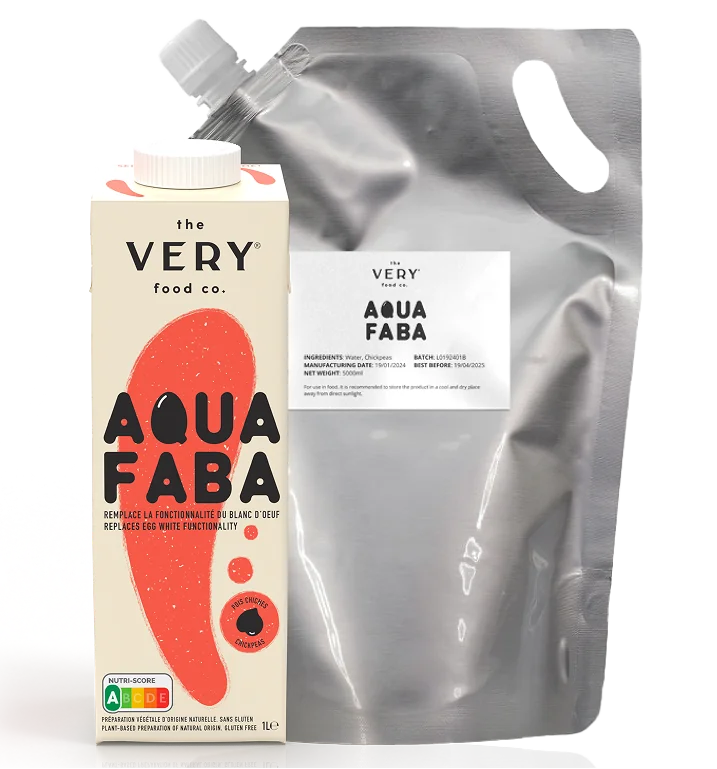
The liquid works on a different clock: 3 to 4 days at 2 to 6 °C once the pack is open. Set that against your oven days if you are deciding between the formats, and compare the three pouch sizes if the middle one is too much or too little for your recipes.
Where can you buy the 200g pouch?
Online, the 200g pouch is sold on Amazon in Germany, which also serves Austria, on InstantChef in France and through Siradis in Switzerland; check the route for your country. Elsewhere, send an enquiry with your country and what you are making, using the business option in the purchase window below.
Watch how quickly one pouch moves through your normal production. If you open pouches one after another, compare your use with the 3kg pouch before the next order.