Egg substitutes
Switching from liquid egg white to aquafaba
If you buy liquid egg white by the carton, you buy it to skip the cracking and to dose by weight. VERY AQUAFABA liquid does the same job from chickpeas: 30g replaces one egg white, it arrives within a supplier specification of 2 to 4 °Brix, and it is poured straight onto the scale. Here is what changes when you switch, what does not, which pack replaces your carton, and what to do with what is left in an opened one. Updated: .
Professional volumes, formats and the technical sheet are answered per project, so tell us what you are making and how much of it.
What changes, and what does not
The good news first: the way you work stays the same.
- You still dose by weight, 30g per egg white, straight from the pack onto the scale.
- You still pour, with nothing to make up.
- You still whip it cold, from a clean bowl, at 4 °C for a meringue.
What changes is everything around the pack:
- No cold chain until you open it. Sealed, the pack keeps at least 12 months at room temperature, in the dry store. A carton of liquid egg white lives in the fridge from the day it arrives.
- 3 to 4 days once opened, at 2 to 6 °C, closed between uses.
- No raw egg in the kitchen. The foam and the emulsion are the same; the food-safety concern of raw egg white is gone, and the dish is egg-free for the guest.
- One specification, every time. The liquid is filtered, refined and held to a supplier specification of 2 to 4 °Brix, so a foam behaves the same from one pack to the next.
Which pack replaces your carton
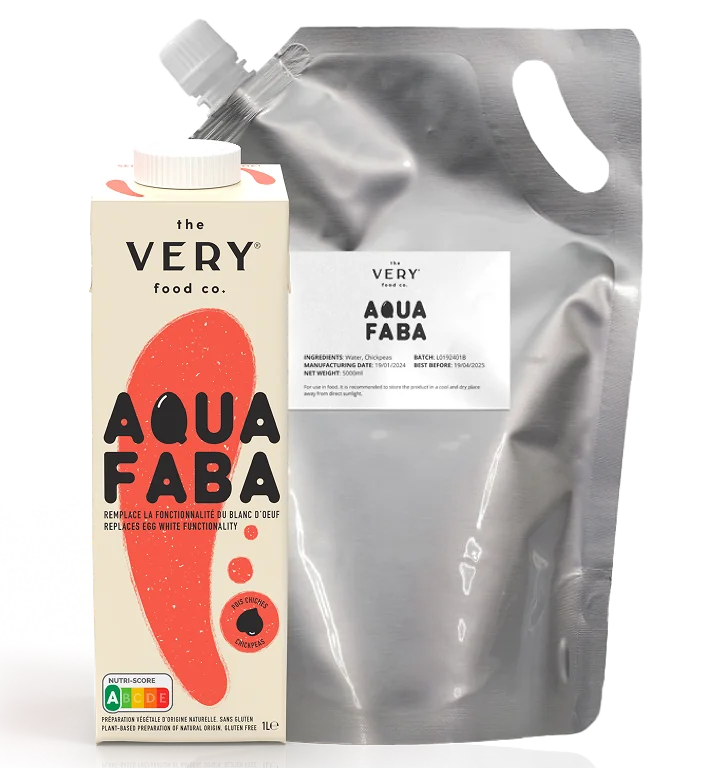
Three liquid packs, described by the egg whites they replace and by the kitchen that empties them.
| Pack | Egg whites | Who empties it |
|---|---|---|
| 1L Tetrapak | 33 | A pastry section, a bar with sours on the menu, a single site |
| 10L bag-in-box | 330 | A central kitchen drawing by the kilo each shift |
| 1T IBC | 33,000 | A line dosing continuously |
In practice: 150g for a meringue batch of about 30, 120g for about 40 macaron shells, 60g for 300g of oil in a mayonnaise, 25g per sour. The application guides carry the method for each. Each activity is worked through on its own page: pastry and bakery, bars and cocktails, foodservice and food manufacturing.
What to do with what is left in an opened pack
An opened pack has 3 to 4 days in the fridge. If your rhythm gets through it in time, close it between uses and that is all. If it does not, you have two options:
- Freeze it. Portion it at 30 to 50g, freeze at -18 °C for up to 3 months, thaw overnight in the fridge and stir until even before whipping. It is never refrozen. The storage and freezing guide has the handling in detail.
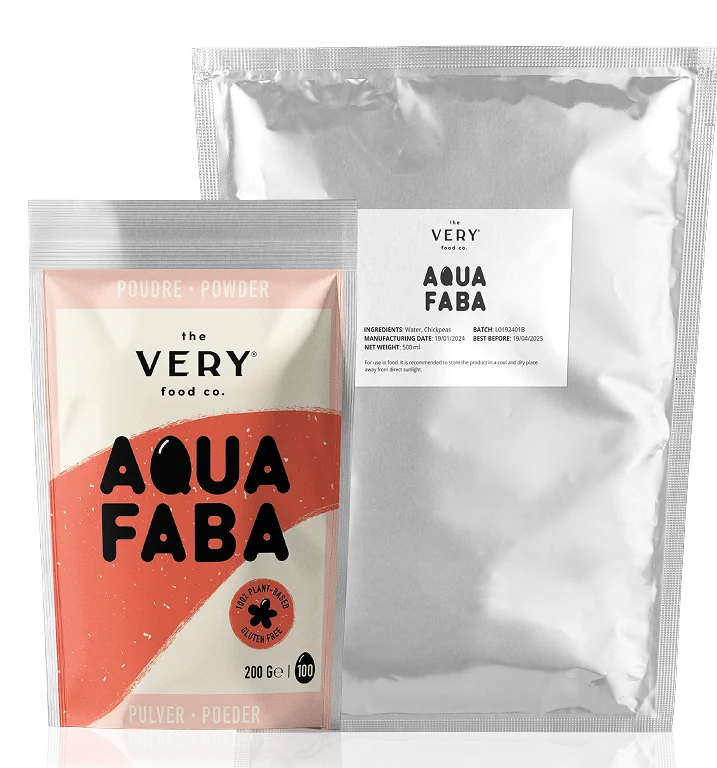
- Or switch that recipe to powder. An opened pouch does not spoil, and it answers the same recipe at the same dose. The powder page explains when the pouch is the better buy.
Whatever the date says, an opened liquid that smells off, shows bubbles or has separated is discarded.