Professionals
Scaling pastry batches: grams, egg whites and pouches
The mixer is running, trays are waiting, and the bench formula still says 10 egg whites. Convert each white to 30g of liquid VERY AQUAFABA, then keep the conversion in grams through the batch.
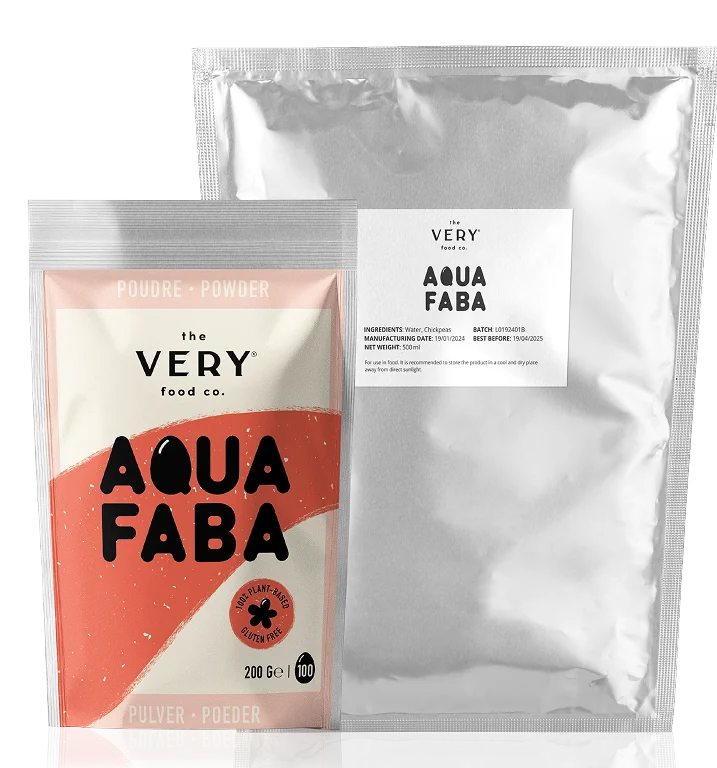
For a formula written with 10 egg whites, use 300g of liquid. If you work from powder, use 20g with 300 ml of water for the same conversion. Work in this order: set the batch size, choose the pouch that covers it, then record the method and yield details that matter on your line. This gives you a practical route from a bench formula to a production sheet for meringue, mousse, and macarons.
Updated: .

How do you scale a recipe written in egg whites?
Start with the egg-white quantity in the original formula and set the batch factor before you weigh anything. Each egg white converts to 30g of liquid VERY AQUAFABA. A meringue formula using 5 egg whites therefore uses 150g, while mousse and macaron formulas can each use 120g for 4 egg whites.
Keep the remaining ingredients in their original weight-based units. Do not treat whole eggs as egg whites: one whole egg is 45g. Keep the egg-white conversion on the batch sheet, so there is one clear ingredient weight to follow. Use the egg white converter to check the starting weight before you release the scaled formula.
How do you scale one written in grams?
Use the gram weight in the formula as the production control point. That avoids converting back to egg counts after the bench recipe has been approved. Match the required liquid weight to VERY AQUAFABA, or make up the listed powder with water.
The working rule is that 2g of powder with 30 ml of water makes 32g of aquafaba and replaces one egg white. The table sets out the fixed conversions for common batch sizes. Put the chosen format beside the ingredient weight on the production sheet. Use the powder calculator when you need to check a different egg-white count.
| Egg whites | Liquid aquafaba | Powder | Water | Pouch that covers the batch |
|---|---|---|---|---|
| 10 | 300g | 20g | 300 ml | 30g pouch |
| 20 | 600g | 40g | 600 ml | 200g pouch |
| 50 | 1.5kg | 100g | 1.5L | 200g pouch |
| 100 | 3kg | 200g | 3L | 200g pouch |
How do you match the batch to a pouch?
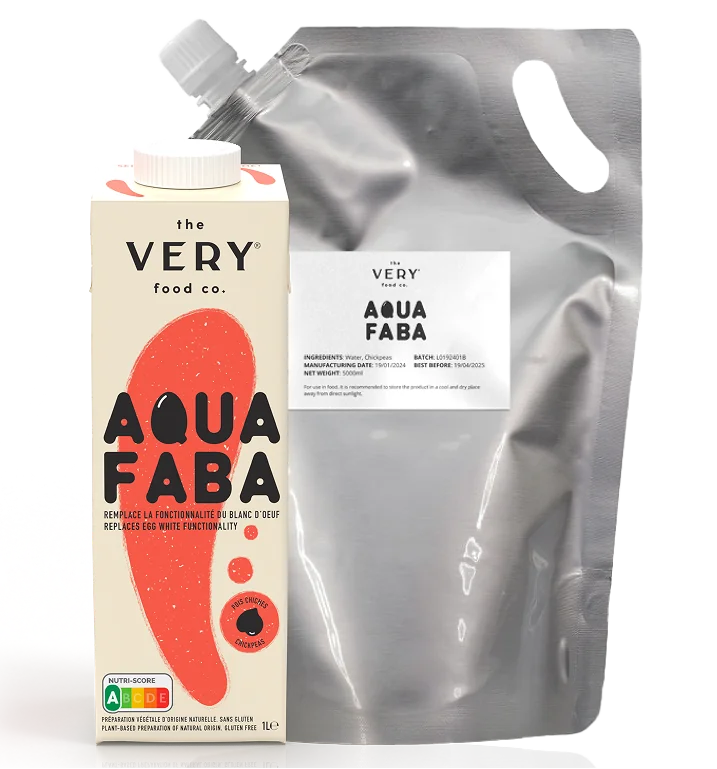
Choose the pouch after you have set the full egg-white equivalent for the run, not from the weight of a single component. A 30g powder pouch replaces 15 egg whites. A 200g pouch replaces 100, and a 3kg pouch replaces 1,500.
For a batch specified as 100 egg whites, the 200g pouch is the stated match when made up with 3L of water. Keep a format note beside the formula, especially when several pastry items draw from the same made-up batch. Take the 200g pouch for the table entries above 10 egg whites, and the 3kg pouch for a much larger planned requirement.
What do you record when the batch grows?
A larger batch needs more than a revised ingredient line. Record the original formula, the target batch, every ingredient in grams, and whether the aquafaba was liquid or powder made up with water. Add the pouch format, the mixing method, the order of additions, the equipment used, and the yield you actually portioned.
Note any change you make before the next run, rather than relying on a memory at the bench. Keep those details with the formula so the next batch starts from the same written method. For work on shells or foam, the guides scale macarons for production and meringue in larger batches provide related process checks.
Start with one live production formula. Write its egg-white requirement, select liquid or powder, and put the corresponding gram weight and pouch format on the batch sheet. Check a conversion with the egg white converter or powder calculator, then send an enquiry if you need to discuss the format for your planned production.
Where to buy VERY AQUAFABA