Ingredients and use
Is aquafaba vegan?
Yes. Aquafaba is plant-based, and VERY AQUAFABA is made from chickpeas and water, with no additives or preservatives. It can replace egg white in a recipe, but whether the finished dish is vegan depends on every other ingredient you put into it. Updated: .
What is in VERY AQUAFABA?
Aquafaba is the cooking water from chickpeas. Its role in a recipe comes from what it can do: whip into foam, help bind ingredients or form an emulsion. It is not an egg product, even when you use it in a preparation usually made with egg white.
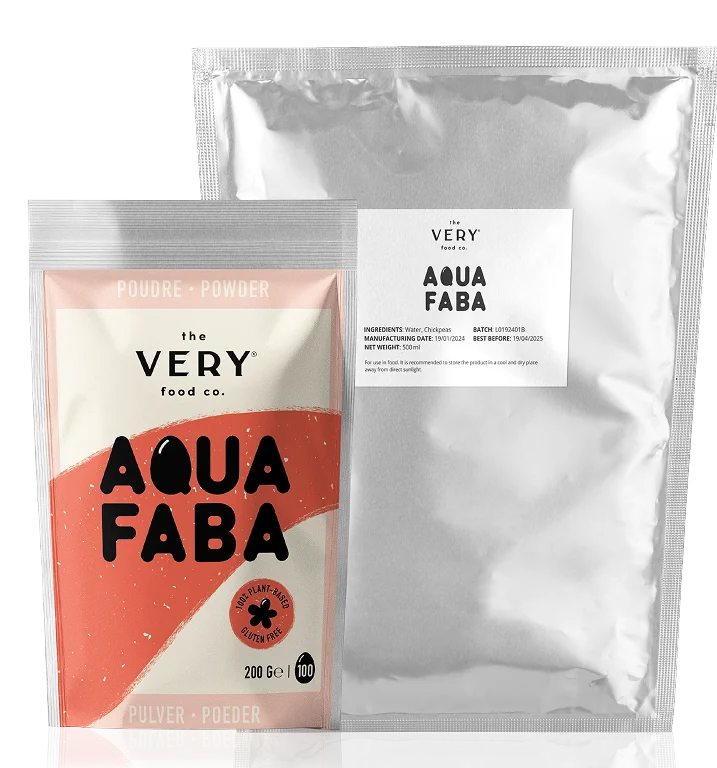
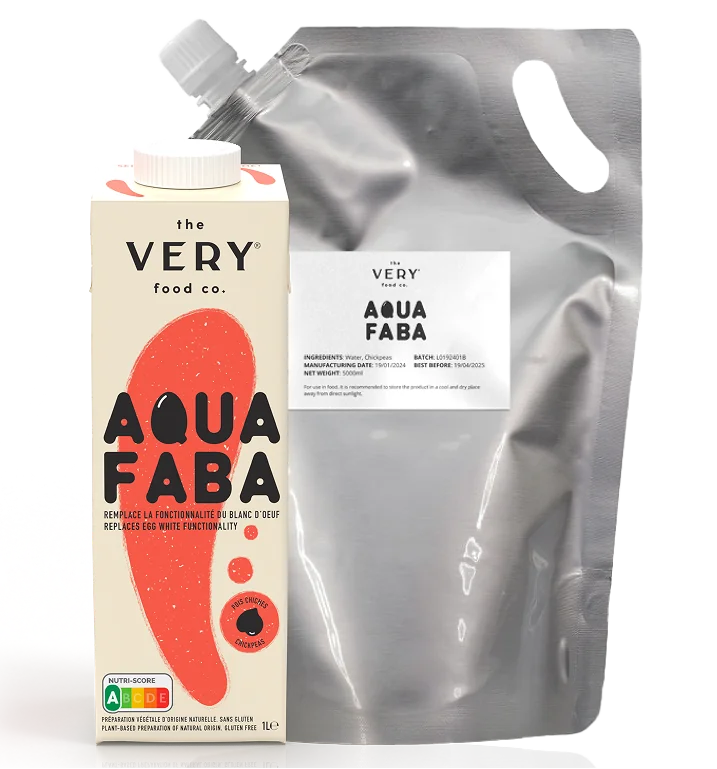
VERY AQUAFABA contains chickpeas and water. Both the liquid and powder formats are vegan. The powder is made up with water before use in a whipped preparation; choosing it does not add an animal ingredient.
Start with the ingredient list when checking whether a product fits your recipe. For the practical difference between formats, see how the powder is prepared and portioned. That choice is about how you work and store it, rather than whether the aquafaba itself is plant-based.
Check the whole recipe, including the filling
Replacing egg white is one part of making a dish vegan. A mousse still contains its chocolate; a filled macaron includes its filling; a pastry may be finished with a cream or glaze. Check those ingredients as well as the component made with aquafaba.
A meringue made with aquafaba and suitable sugar can be vegan. For a chocolate mousse, choose chocolate that fits the same requirement. The aquafaba does not change the ingredients of the chocolate, and it does not make a dairy filling plant-based.
The same distinction matters when you describe a finished dessert. Name what you have changed, such as replacing egg white with aquafaba, and check the complete recipe before calling the whole dish vegan. The ingredient label and the finished recipe answer different questions.
Vegan and allergen information answer different questions
A plant-based recipe can still contain ingredients someone needs to avoid. The almonds in a dacquoise remain almonds after the egg white is replaced. Flour, chocolate and fillings also have their own ingredient and allergen information.
Read each label when choosing ingredients for a particular person. Do not use the word vegan as a substitute for checking those labels. The fact that VERY AQUAFABA contains chickpeas is relevant information in its own right.
For a concrete example, make the almond dacquoise with aquafaba: the recipe uses aquafaba for its meringue and ground almonds for the pastry. Removing egg white does not remove the almonds.
How much do you use instead of an egg?
The conversion is 30g of liquid aquafaba per egg white, or 2g of powder made up with 30 ml of water. A whole egg uses 45g of liquid aquafaba. Whole-egg substitution needs its own recipe checks because egg yolk and egg white do different jobs.
Begin with a preparation that already gives an aquafaba method. You can whip meringues with 150g of liquid aquafaba and 150g of sugar, or fold a chocolate mousse using 120g of liquid aquafaba. Follow the method as well as the quantity.
For your own formula, check the egg substitution quantities before scaling. Decide whether you are replacing whites or whole eggs first; a vegan ingredient does not make those two conversions interchangeable.
Choose a format you will use in time
Unopened liquid and powder keep for at least 12 months at room temperature. After opening, liquid keeps 3 to 4 days at 2 to 6 °C. Keep opened powder dry and closed until the pouch's best-before date.
If you only make the recipe occasionally, prepare the powder you need for that batch. If it is on the prep list regularly, compare your use with an opened liquid pack. Both choices keep the same plant-based ingredient at the centre of the recipe.