Professional application guide
Aquafaba macarons: liquid or powder?
Yes, you can make macarons without egg whites. Simply use 120g of aquafaba in place of the egg whites, and keep the rest of your recipe as it is. This guide walks you through each step, shows you what to watch for along the way, and helps you choose between liquid and powder. Updated: .
One batch makes about 40 filled macarons.
Liquid
- 120gper batch, in place of 4 egg whites
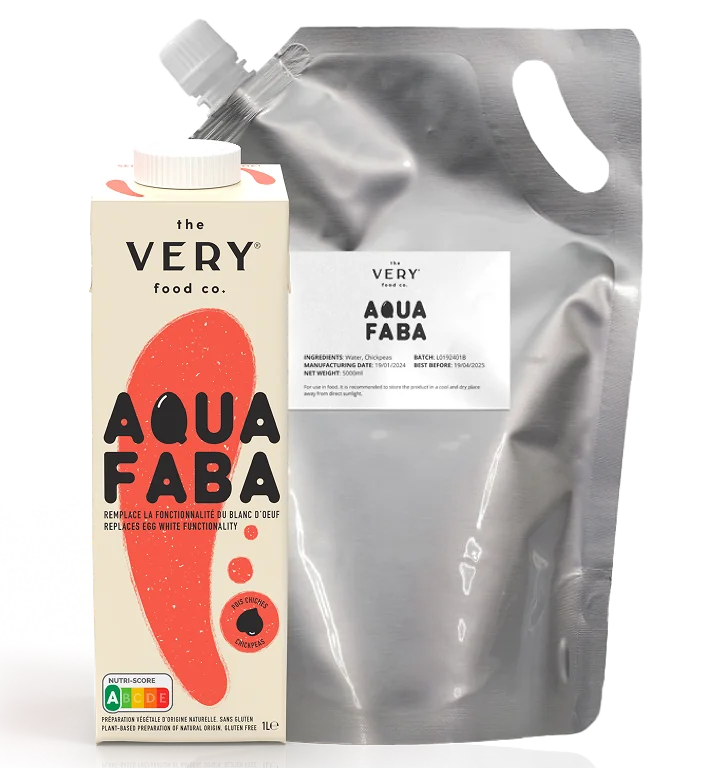
- 8 batchesfrom a 1L Tetrapak
Powder
- 8gper batch, mixed with water
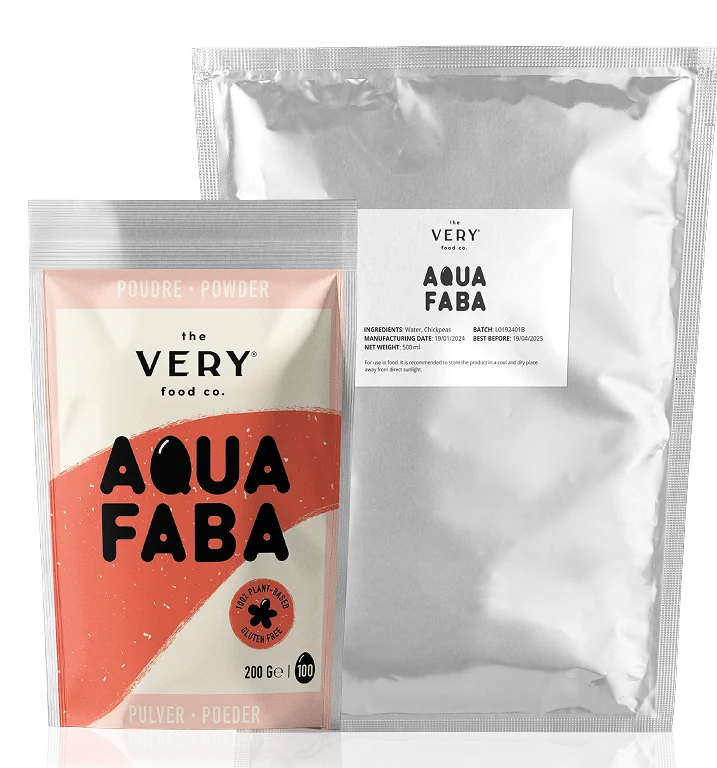
- 25 batchesfrom a 200g pouch
How to make aquafaba macarons
Aquafaba replaces the egg whites only, so the almond flour, icing sugar and caster sugar of your formula stay as they are. The foam has to survive two steps, the fold and the rest, so timing matters more than the whipping itself.
- Sift the almond flour and icing sugar together and set aside. Line the trays now.
- Whip 120g chilled aquafaba on high speed in a clean, grease-free bowl to soft peaks. Add the cream of tartar, then 150g caster sugar gradually, to glossy stiff peaks.
- Fold the dry mix in three additions. Stop when the batter runs off the spatula in thick, slow ribbons.
- Pipe 3 to 4 cm rounds onto parchment, evenly spaced.
- Rest at room temperature until a dry skin forms: 30 to 60 minutes, depending on humidity.
- Bake at 130 °C, fan off, for 16 to 18 minutes. Cool fully on the tray before handling.
- Pair, fill and refrigerate for 24 hours before serving, so the texture develops.
Running industrial batches? Hold the aquafaba concentration at 1.2 to 1.3 g/ml for shells that match from run to run.
Liquid or powder? Start with how often you pipe
Your macarons already mature in the fridge, so keeping an opened pack of liquid aquafaba cold is easy. What matters is how quickly you use it. A 1L pack makes 8 batches of macarons. If you won't bake that many in the 3 to 4 days after opening it, powder is the better choice: a 200g pouch makes 25 batches and does not spoil after opening. Sealed, both keep at least 12 months at room temperature.
| Your kitchen | Pick | Why |
|---|---|---|
| Patisserie piping shells most service days | Liquid, 1L Tetrapak | 8 batches per pack, used up inside 3 to 4 days |
| Shop baking macarons to order | Powder, 200g pouch | It covers the long gaps between runs |
| Fridge already full of maturing macarons and ganache | Powder | It keeps dry and closed, outside the cold store |
| You whip the moment the trays are lined | Liquid | Cold and ready for the whisk, with nothing to make up |
| Plant-based patisserie line piping continuously | Liquid, 10L bag-in-box or 1T IBC | The feed never stops, and the cold chain belongs to the plant |
Powder is not a dry-mix shortcut. The aquafaba is whipped on its own first, so make the powder up with water before it goes anywhere near the almond flour.
Working with each format
Liquid
- Leaves the opened pack cold, which is how the recipe wants it for whipping.
- It shares the fridge with your maturing macarons, so mark the opening date on the pack.
- Discard it if it smells off, shows bubbles or has separated.
Powder
- 2g powder + 30 ml water = 32g of aquafaba, equivalent to the same mass of liquid aquafaba. 2g of powder replaces 1 egg white.
- For one batch of macarons: 8g powder + 120 ml water.
- Make it up and chill it before you whip. Cold aquafaba whips faster into a more stable foam.
When the shells go wrong
| What you see | Why | Fix |
|---|---|---|
| Foam will not reach volume | Grease on the bowl or whisk | Degrease everything before you start |
| Meringue deflates before piping | It stood while the dry mix or trays were prepared | Sift and line the trays first, whip last |
| Shells lose their lift | Folded past the ribbon stage, or folded roughly | Stop at thick, slow ribbons |
| No skin after resting | Humid room | Rest longer and judge by touch, not the clock |
| Shells weep in storage | Sugar not fully dissolved | Add the caster sugar gradually |
| Shells soften in storage | Shells pull moisture from the air | Store in a low-humidity place |
| Shells vary from batch to batch | Aquafaba concentration drifted | Hold 1.2 to 1.3 g/ml on industrial batches |
Where to buy VERY AQUAFABA
Professional enquiries: Discuss your production needs
General enquiries: Get in touch