Process sheet
How to make aquafaba macarons: the step-by-step sheet
Macaron shells are decided in the minutes between the whisk stopping and the tray going in. This sheet is how you keep those minutes under control: the VERY AQUAFABA macaron recipe as a checklist you print, fill in as you go, and keep. Updated: .
Process sheet
| # | Step | Reference | Your batch |
|---|---|---|---|
| 1 | Sift the almond flour and icing sugar together; line the trays | 150g, 150g | |
| 2 | Whip the chilled aquafaba on high speed to soft peaks | 120g | |
| 3 | Add the cream of tartar, then the caster sugar gradually, to glossy stiff peaks | 150g | |
| 4 | Fold the dry mix in three additions | Stop at thick, slow ribbons | |
| 5 | Pipe rounds onto parchment, evenly spaced | 3 to 4 cm | |
| 6 | Rest at room temperature until a dry skin forms | 30 to 60 min, depending on humidity | |
| 7 | Bake with the fan off | 130 °C, 16 to 18 min | |
| 8 | Cool fully on the tray before handling | Fully cooled | |
| 9 | Pair, fill and refrigerate before serving | 24 h |
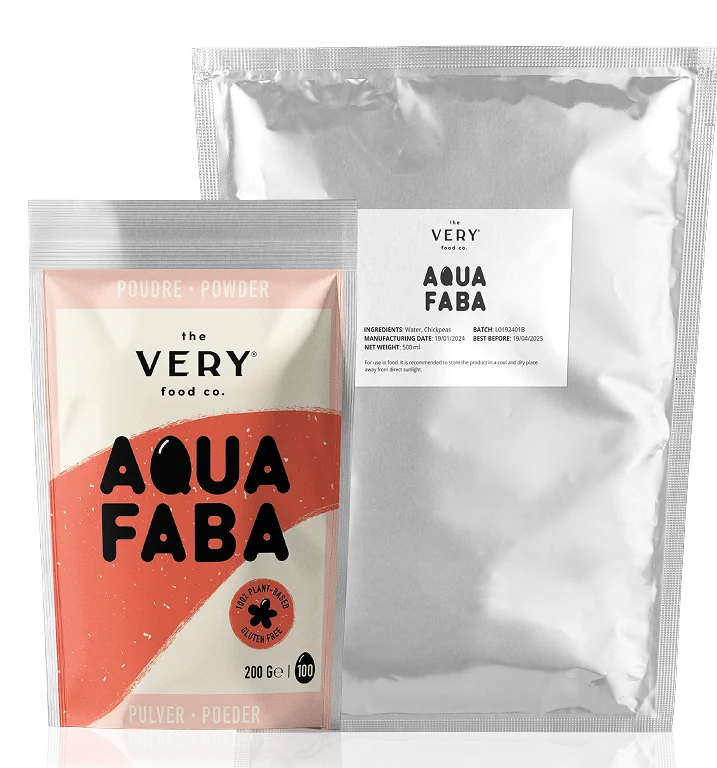
Powder: make up 8g of VERY AQUAFABA powder with 120 ml of water and chill it before step 2. Cold aquafaba whips faster into a more stable foam.
Checks
| What you see | Why | Fix |
|---|---|---|
| Foam will not reach volume | Grease on the bowl or whisk | Degrease everything before you start |
| Meringue deflates before piping | It stood while the dry mix or trays were prepared | Sift and line the trays first, whip last |
| Shells lose their lift | Folded past the ribbon stage, or folded roughly | Stop at thick, slow ribbons |
| No skin after resting | Humid room | Rest longer and judge by touch, not the clock |
| Shells weep in storage | Sugar not fully dissolved | Add the caster sugar gradually |
| Shells soften in storage | Shells pull moisture from the air | Store in a low-humidity place |
| Shells vary from batch to batch | Aquafaba concentration drifted | Check 2 to 4 °Brix with a refractometer on industrial batches |
Source: VERY AQUAFABA, Macarons with Aquafaba (September 2026)
How to use this sheet
Print one per batch and keep it by the mixer, with the full macaron recipe at hand if you need the method in detail. As you go, write what you actually did in the last column: how long the meringue took, how many folds, how long the shells rested and what the room was like, how long the tray baked. Macarons fail for small reasons, and this is where you find them.
Keep the filled-in sheets. Humidity changes from one day to the next, and the sheets from a damp week are worth more than any rule. If a batch goes wrong and you can't see why, send us the sheet: it is the fastest way for us to help.
Before you whip aquafaba for macarons
Three things settle most batches before the whisk turns:
- The almond flour and the icing sugar are sifted together and the trays are lined. The foam must not wait while you do it.
- The aquafaba is cold, straight from the fridge. Made-up powder is chilled to the same point.
- The bowl and the whisk are wiped clean, and the 150g of caster sugar is weighed and within reach.
How to tell each step is going right
The sheet gives you the value to hit. This is how you know you have hit it:
- Step 3, stiff peaks. Glossy, and the peak stands straight when you lift the whisk. The sugar went in gradually, after soft peaks; sugar that did not dissolve is what weeps out of the shells later.
- Step 4, the fold. Three additions, and you stop when the batter runs off the spatula in a thick, slow ribbon. Past that point the shells lose their lift.
- Step 5, piping. Rounds of 3 to 4 cm, evenly spaced, and the batter settles flat without spreading.
- Step 6, the rest. A dry skin that does not stick to a light finger. It takes 30 to 60 minutes in a dry room and longer in a damp one; judge by touch, not by the clock.
- Step 7, the bake. 130 °C with the fan off, 16 to 18 minutes per tray. The shells lift off the parchment cleanly once fully cooled.
- Step 9, maturing. Paired, filled and refrigerated for 24 hours before serving, so the shell and the filling come together.
On industrial batches, check each lot with a refractometer against the supplier specification of 2 to 4 °Brix, for shells that match from run to run.
Where to buy VERY AQUAFABA
Professional enquiries: Discuss your production needs
General enquiries: Get in touch