Tools
Convert a recipe from eggs to aquafaba
Enter 3 whole eggs, 2 extra whites and 1 extra yolk in the egg replacement calculator. It returns 210g of liquid aquafaba plus 10g of oil, or 14g of powder made up with 210 ml of water plus 10g of oil. Use 45g of liquid aquafaba for each whole egg.
Keep whole eggs, separate whites and separate yolks in their own fields. That keeps a yolk already inside a whole egg from being counted twice. The calculator also separates the oil needed where yolk richness matters from the aquafaba used for whipping. If your formula includes whole eggs, adjust its other liquids after you convert them. If it only uses extra whites, leave those liquids as they are. Choose liquid for direct measuring, or make up powder with water before it reaches the bowl.
Updated: .
Recipe converter
Your aquafaba
Enter the whole eggs, extra whites and extra yolks from your ingredient list.
Enter your whole eggs, extra whites and yolks
Start with the egg quantities written in your formula, rather than converting a combined egg weight. Whole eggs include the white and yolk already paired in each egg. Extra whites and extra yolks are ingredients listed separately, so they belong in separate fields.
| Calculator field | What to enter |
|---|---|
| Whole eggs | The number of whole eggs in the recipe. |
| Extra egg whites | Whites listed separately from whole eggs. |
| Extra egg yolks | Yolks listed separately from whole eggs. |
Enter zero for a field your recipe does not use. Do not add the yolk from each whole egg to the extra-yolk field. Keeping that split lets the calculation show liquid or powder, water for powder, and oil only where it is needed.
Three eggs, two whites and one extra yolk
Use the three entries exactly as the formula states. Here, the 3 whole eggs account for both parts of those eggs. The separate yolk appears only once, as its own ingredient. The calculator adds the amounts below and shows the oil apart from the aquafaba.
| Recipe entry | Liquid aquafaba | Powder | Water | Oil |
|---|---|---|---|---|
| 3 whole eggs | 135g | 9g | 135 ml | 0g |
| 2 extra whites | 60g | 4g | 60 ml | 0g |
| 1 extra yolk | 15g | 1g | 15 ml | 10g |
| Total | 210g | 14g | 210 ml | 10g |
A 30g powder pouch covers the 14g result. Make up that 14g with 210 ml of water before you add it to the recipe.
Each part of the egg goes in its own way
Whole eggs change the water balance, because aquafaba contains more water than a whole egg. When you replace whole eggs, start by reducing the recipe's other liquids by 5 to 10%. For 200 ml of milk, begin with 180 to 190 ml. Do not apply that reduction when you are replacing only extra whites.
Make powder up with its stated water first. That water stays as given, even when the recipe also needs a whole-egg adjustment. Whip the portion standing in for whites on its own when the method calls for whipped whites. Keep the 10g oil used for an extra yolk out of any foam, then add it where the yolk's richness belongs.
Choose the pouch that covers your recipe
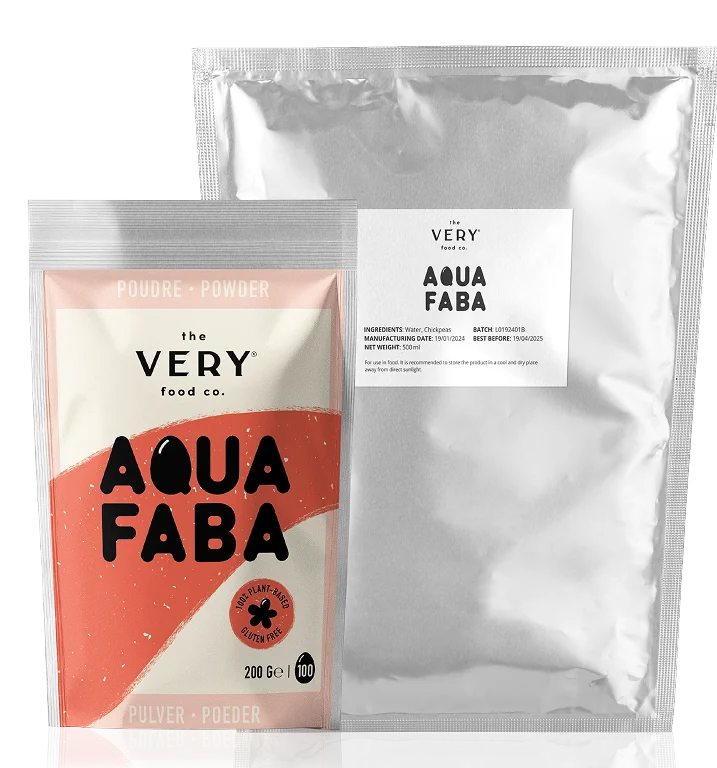
Let the calculator's powder result set the minimum powder pouch. A 30g pouch replaces 15 egg whites, a 200g pouch replaces 100, and a 3kg pouch replaces 1,500. For the worked conversion, 14g fits in the 30g pouch.
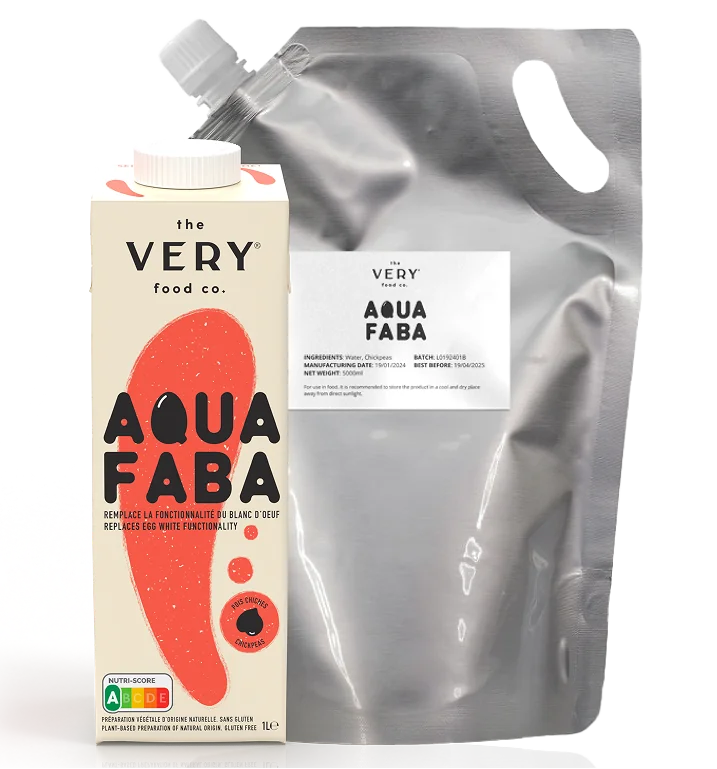
For liquid batches, 1L replaces 33 egg whites, 10L bag-in-box replaces 330, and 1T IBC replaces 33,000. If you make up a full powder pouch, 200g takes 3L of water and makes 3.2kg, while 3kg takes 45L and makes 48kg. Make only the aquafaba your batch needs.
Enter the three egg counts from your next formula, then choose liquid or powder. If you use powder, make it up with the calculated water before mixing. Keep any oil for separate yolks out of the whipped portion, then select the pouch that covers the amount you need.
Where to buy VERY AQUAFABA