Reference
What can you make with aquafaba?
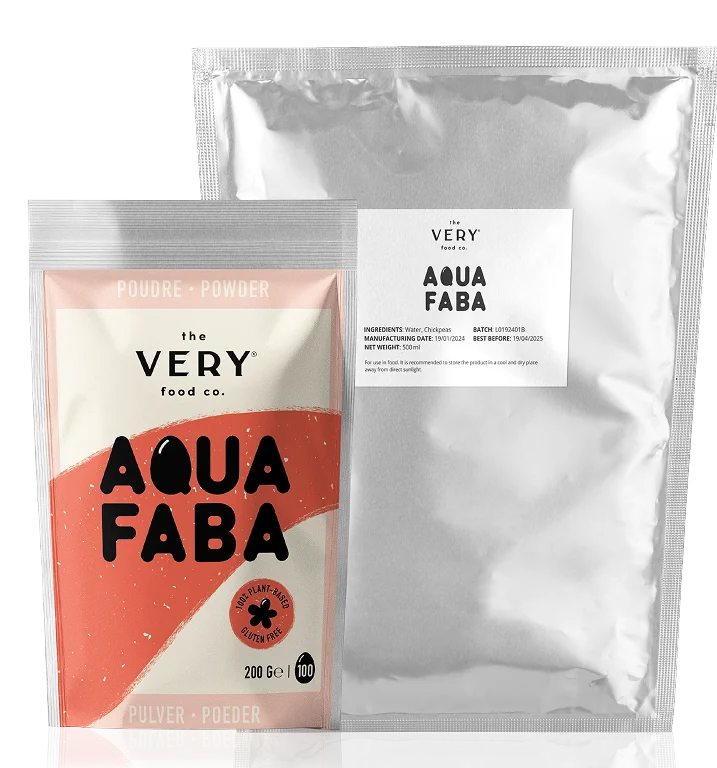
You can make anything that uses egg whites to foam, bind or emulsify: meringue, mousse, macarons, mayonnaise, cakes and sours. VERY AQUAFABA is chickpea cooking water, filtered, refined and standardised so it performs the same from batch to batch.
Use it where the job is structure, not where a recipe simply needs moisture. It foams for whipped preparations, emulsifies mayonnaise, and binds baking mixtures. For a sour, measure 20 ml with a jigger. Start with the preparation you already make, then follow its stated method and temperature checks. Your existing formula still sets the sugar, fat, heat and resting steps.
Updated: .
What does aquafaba do in a recipe?
The role changes with the preparation. Match the method to foaming, binding or emulsifying, then use aquafaba recipes to choose the right route. The doses below are recipe starting points, not interchangeable measures.
| Preparation | What aquafaba does | Dose |
|---|---|---|
| Meringue | Foams | 150g aquafaba with 150g sugar |
| Chocolate mousse | Foams | 120g aquafaba |
| Macarons | Foams | 120g aquafaba |
| Mayonnaise | Emulsifies | 60g aquafaba |
| Cakes | Binds | 45g per whole egg |
| Sours | Foams | 20 ml per drink |
Which sweet recipes use it?
When pastry prep calls for whipped structure, keep each method separate. The aquafaba meringue formula uses 150g aquafaba and 150g sugar for about 30 meringues. Chill the aquafaba to 4 °C, whip for 3 to 5 minutes, then bake at 90 °C for 1.5 to 2 hours.
Aquafaba chocolate mousse uses 120g aquafaba, 100g sugar and 180g chocolate for about 6 portions. Melt the chocolate at 45 to 50 °C, fold it in at 35 °C or lower, and chill the finished mousse for at least 2 hours. Aquafaba macarons need a separate rest, bake and maturation process. Aquafaba pavlova has its own method and timings; do not borrow them from macarons.
Which savoury recipes use it?
Mayonnaise is the direct savoury application because aquafaba holds the oil and water together. Aquafaba mayonnaise uses 60g aquafaba and 300g oil, with mustard, salt and lemon juice, to make about 500g. Keep it at 4 to 6 °C and use it within 7 days.
For cakes and other baked mixtures, aquafaba provides binding. Use 30g in place of one egg white or 45g in place of one whole egg. Where a recipe needs the richness of a yolk, use 15g aquafaba with 10g oil. Check the aquafaba baking guide before changing a production formula.
How do you use it in cocktails?
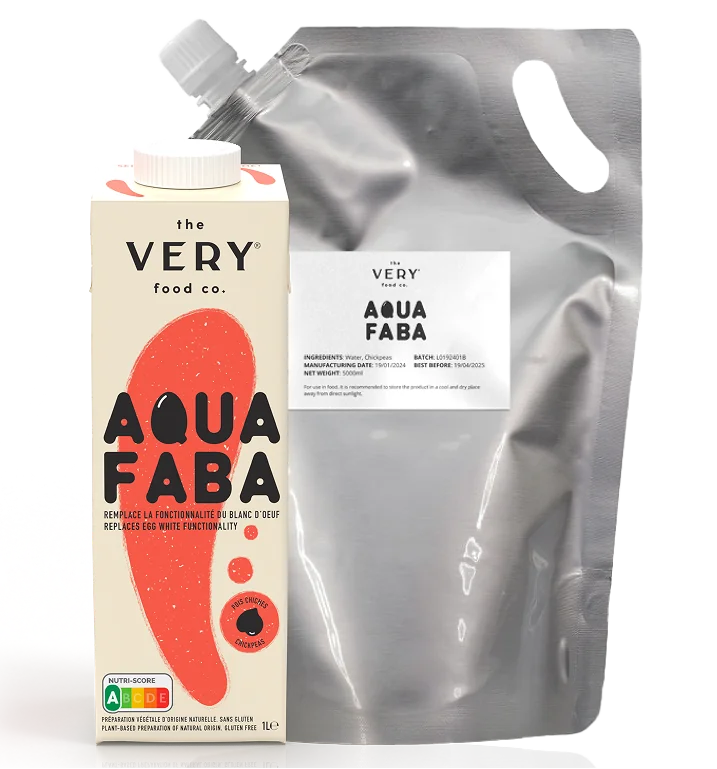
At a sour station, add the aquafaba at the shake, not into the pre-batch. Pre-batch the spirit, citrus and syrup first, then measure 20 ml of aquafaba with a jigger for each drink. A 1L Tetrapak makes 50 drinks.
Dry shake for 10 to 15 seconds without ice, then shake for 10 to 15 seconds with ice. This keeps the same sequence for each order. Made-up powder is used at the same 20 ml measure. For aquafaba in cocktails, keep the carton beside the shaker and jigger so it goes in at the shake.
Choose the preparation already on your menu or production list. Set out the required aquafaba amount, then follow its temperature, whipping, folding or shaking method. If you use several formats across pastry, baking and bar work, compare liquid and powder against the batch size you make.
Where to buy VERY AQUAFABA