Reference
Foaming, binding or emulsifying: which job aquafaba does in your recipe
Before you weigh anything, decide what the egg does: whip aquafaba for foam, use it unwhipped for binding, or blend it with oil to emulsify. For a mayonnaise-style emulsion, start with 60g aquafaba to 300g oil.
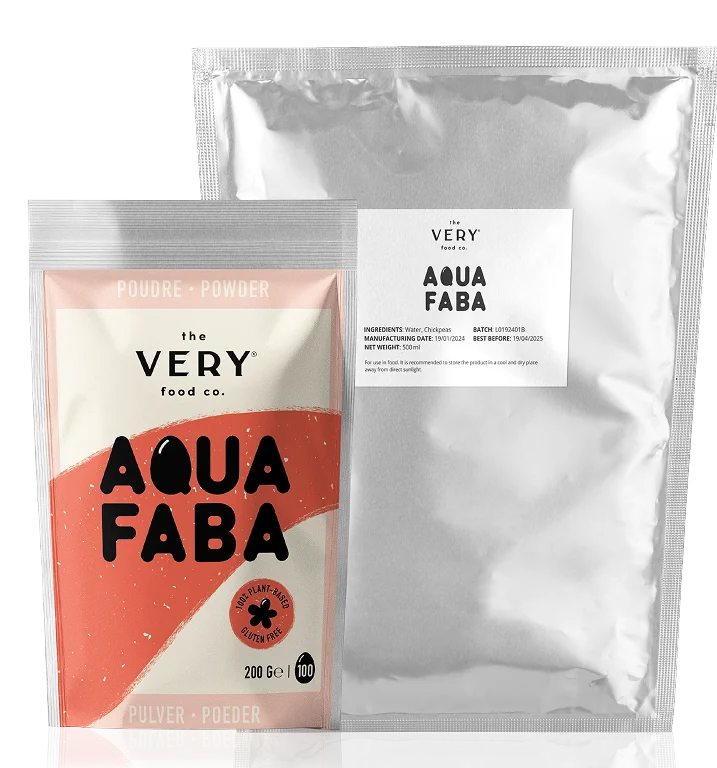
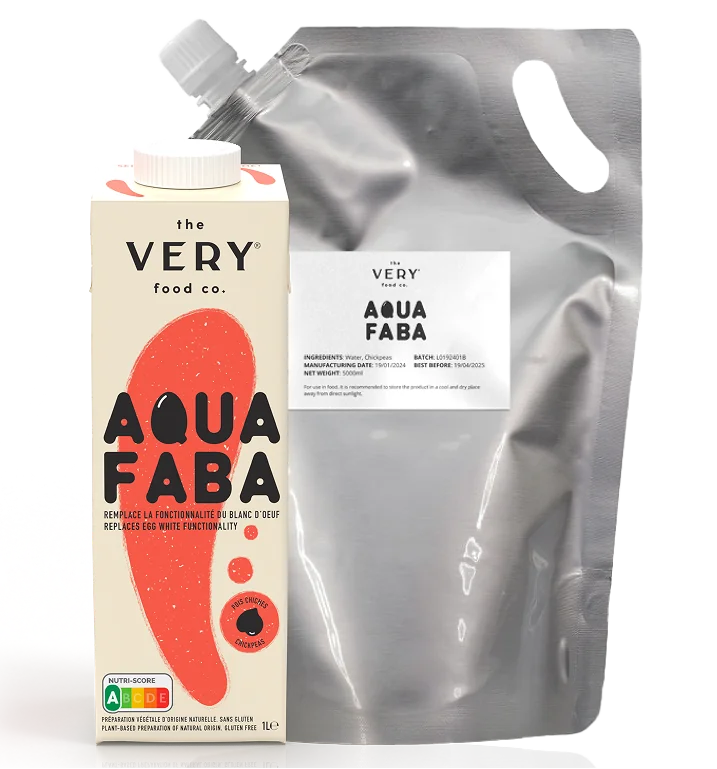
A plated meringue, a rich cake batter and a mayo test can all begin with the same ingredient, but they ask it to do different work. VERY AQUAFABA is filtered, refined and standardized chickpea cooking water made from water and chickpeas. That consistency lets you set the method around the job instead of treating every egg replacement as a whip. Use the egg's function as your brief: air retention, structure in the bake, or a water and oil mix. Then choose when it enters the bowl, how you mix it, and the dose you test.
Updated: .
Which job does the egg do in your recipe?
Read the original formula as a set of egg jobs. An egg white points to aeration. A whole egg usually points to binding in a baked formula. A yolk-led mixture points to an emulsion, with added oil where its richness matters. Start each conversion at the applicable ratio, then test the method in the finished recipe.
| Job | Typical recipes | How aquafaba goes in | Dose |
|---|---|---|---|
| Foam | Meringue, mousse, cocktails | Whipped | 30g per egg white |
| Binding | Baking | Unwhipped | 45g per whole egg |
| Emulsion | Mayonnaise | Blended with oil | 15g plus 10g oil per yolk |
How do you use aquafaba when it has to foam?
Foam needs air built before the recipe moves on. Chill the aquafaba to 4 to 6 °C before whipping. When a formula is built around whipped egg whites, whip the aquafaba first and fold it into the remaining mix.
For a meringue trial, use 150g aquafaba and 150g sugar. Chill the liquid to 4 °C, whip it for 3 to 5 minutes, then bake at 90 °C for 1.5 to 2 hours. That batch makes about 30 meringues, giving you a defined scale for a first production test.
How do you use it when it has to bind?
Binding is the right route when the egg is there to hold a bake together rather than create a whipped structure. Keep the aquafaba unwhipped. For a formula built around whole eggs, begin at 45g liquid aquafaba per egg and check the batter after the normal mixing sequence.
Fat changes the order of addition. In fat-rich batters, mix the aquafaba with the sugar before it meets the fat. This keeps the conversion aligned with the baking method. Where the original recipe relies on whipped whites, treat that as a foam job instead and whip before folding.
How do you use it when it has to emulsify?
An emulsion calls for aquafaba and oil to be blended together, not whipped as a meringue base. For mayonnaise, use 60g aquafaba with 300g oil, plus 10g mustard, 5g salt and 20g lemon juice. This makes about 500g.
Keep the finished mayonnaise at 4 to 6 °C and use it within 7 days. If the yolk's job in another formula is richness as well as emulsifying, use 15g aquafaba plus 10g oil per yolk as your starting conversion. Keep that test separate from the foam method.
Take one egg-led formula from your current development queue and write the egg's job beside each use. Set the matching starting ratio, then run a foam, binding or emulsion trial with the final process you intend to use before adjusting the rest of the formula.
Where to buy VERY AQUAFABA