Reference
Keeping aquafaba meringues crisp
Meringues take up moisture from the air, so keep them airtight at room temperature with a desiccant pouch, and dry them fully. Bake at 90 °C with the fan off for 1.5 to 2 hours, until completely dry.
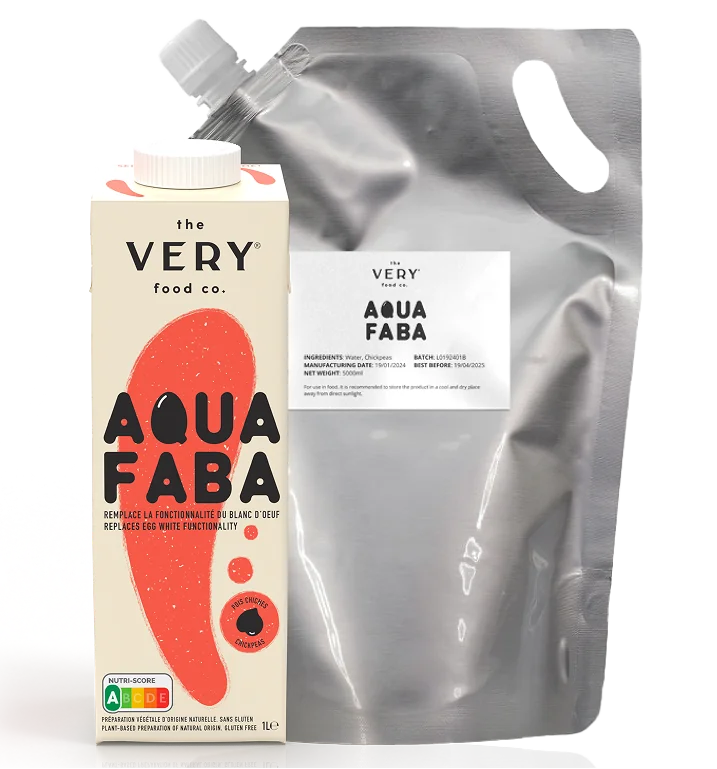
When a tray that felt crisp goes soft, the cause is usually moisture after baking or sugar that did not dissolve during whipping. Start with a controlled batch: VERY AQUAFABA is ready-made, filtered and standardised chickpea cooking water, and its 1L Tetrapak gives you 33 egg whites for repeat home bakes rather than relying on liquid from a can.
This guide shows you why the shells soften, how to dry and store them, and how to approach the next batch with a clearer routine.
Updated: .
Why meringues turn soft
Soft shells point to moisture getting into the meringues after they leave the oven. Even a fully baked shell can take up moisture from the air if it is left uncovered or stored in a container that is not airtight.
Undissolved sugar causes another problem: it can make the meringue weep. Add caster sugar gradually, one tablespoon at a time, and allow each addition to dissolve before adding more. The finished mixture should reach glossy stiff peaks before you pipe it. A dry bake and dissolved sugar give you the conditions needed for a crisp shell.
Dry them right through
Treat drying as part of the bake, not as something the meringues do once they are out of the oven. Chill 150g of aquafaba to 4 °C, then whip it on high speed to soft peaks, which takes about 3 to 5 minutes. Add 150g of caster sugar gradually on medium speed, then whip to glossy stiff peaks.
Pipe rounds measuring 3 to 4 cm. Bake them at 90 °C with the fan off for 1.5 to 2 hours, until completely dry, then let them cool on the tray. This quantity makes about 30 small meringues.
Store them airtight, with a desiccant
Let the meringues cool on their tray before you put them away. Once they are cool, move them into an airtight container and keep that container at room temperature. Do not leave the lid loose while you prepare other food.
Add a desiccant pouch if you have one. It helps manage the moisture that meringues draw from the surrounding air. Close the container again as soon as you take meringues out. This storage step matters as much as drying the batch fully in the oven.
Bake the next batch
Set out your storage container before you begin, so the cooled meringues have somewhere airtight to go. For extra foam stability, you can use 2g of cream of tartar or 1g of citric acid with the chilled aquafaba. Keep the sugar addition gradual and do not pipe until the mixture is glossy and stiff.
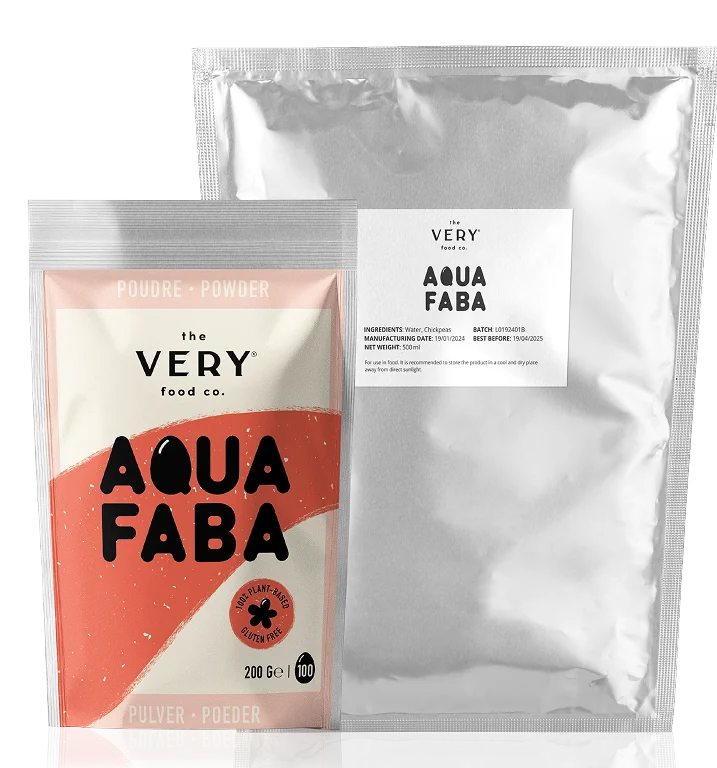
VERY AQUAFABA gives you a measured starting point for repeat baking. The 1L Tetrapak contains 33 egg whites, while the 200g powder pouch contains 100 egg whites. For a small tray, use the 150g aquafaba and 150g caster sugar method, then focus on the low, fan-off bake.
For your next tray, prepare the airtight container before you start whipping and follow the low, fan-off baking method. If you want a measured aquafaba format for repeat home baking, choose the format that suits how often you make meringues, then begin with the 150g batch method.
Where to buy VERY AQUAFABA