Professionals
How to replace egg whites in a pastry production schedule
You are weighing meringue mix before the morning bake. Every egg white becomes 30g of aquafaba on the card, and you switch one recipe at a time.
Start with a recipe that already has a clear egg-white weight, then fit its aquafaba batch into your usual prep sequence. Update the card before you make the next batch. Plan the opened liquid around the next 3 to 4 days, then record what happens at the bench. For a direct reference, 150g of aquafaba replaces 5 egg whites in a meringue batch with 150g of sugar, making about 30 meringues. This guide gives you a repeatable conversion rule, an opening-date routine, and a short check process before another card changes.
Updated: .

Which recipes do you switch first?
Pick a product you make regularly and can inspect at more than one point in the process. Meringue gives a simple first card: 150g of aquafaba, 150g of sugar, and about 30 meringues. Chocolate mousse uses 120g for about 6 portions. Macarons also use 120g, for about 40 filled macarons.
Start with one of those production lines, not all of them. Keep the existing recipe card beside the rewritten version for the first run. This lets you review the specific mixing, folding, piping, or baking notes that matter to that item before you put another recipe into the schedule.
How do you rewrite the recipe cards?
Keep the conversion on the weigh-up line, not in a separate note. Where the card lists egg whites by count, write the aquafaba weight beside the replacement ingredient. A card for 5 egg whites can state 150g of aquafaba, which gives the person on prep one clear quantity to scale.
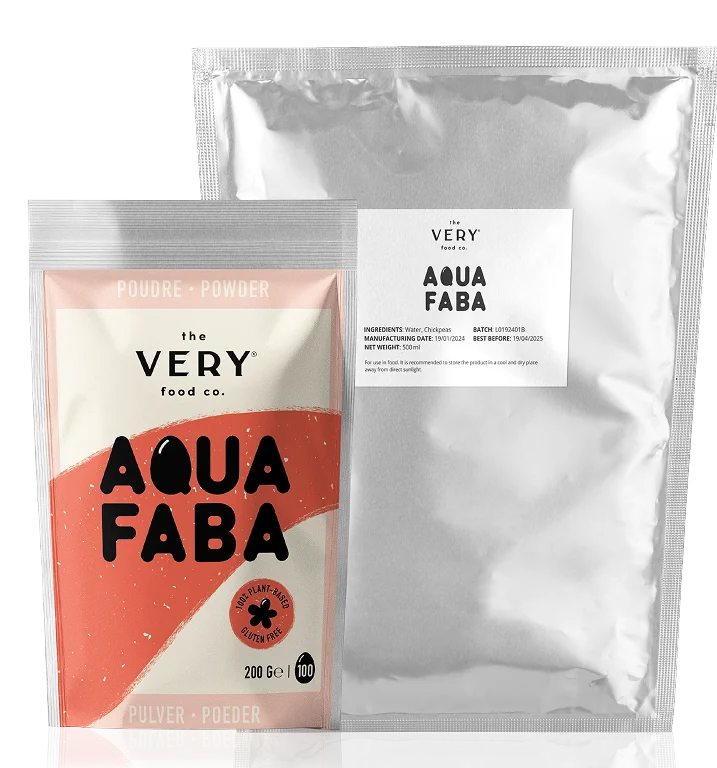
Add fields for the opening date, the recipe version, and the bench notes from the first production run. If you use powder, write a separate preparation line: 2g of powder made up with 30 ml of water makes 32g of aquafaba and replaces one egg white. Make up only what the batch needs.
How do you plan the opened packs across the week?
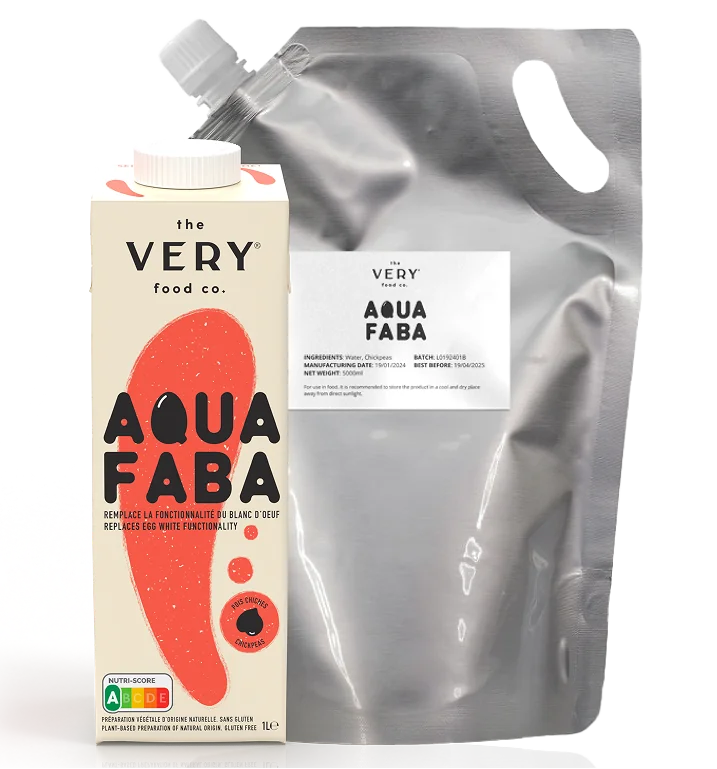
Give opened liquid its own place on the weekly prep list. Keep it at 2 to 6 °C, mark the opening date, and schedule it across the following 3 to 4 days. The table shows three documented recipe batches placed within three days of opening a liquid pack.
| Day | Recipe | Aquafaba |
|---|---|---|
| Monday | Meringue | 150g |
| Tuesday | Chocolate mousse | 120g |
| Wednesday | Macarons | 120g |
Build the actual sequence from your order list and your pack format. If a later batch is not scheduled inside that storage window, keep an unopened liquid pack closed or make up the powder only when that batch is due.
How do you check the first week?
Treat the first week as a production check, not a full rewrite of the pastry section. Record the recipe name, the aquafaba weight, the opening date, and what you see during mixing, piping, setting, or baking. Keep those notes with the card rather than relying on memory at the next prep.
Compare each finished batch with the standard you use for that product. If the card needs a clearer instruction, change that one line before the next scheduled batch. Once the revised card is clear at the bench, move to the next recipe and repeat the same check.
Open one card that is due in the next prep cycle. Replace its egg-white line with the 30g rule, date the liquid pack when you open it, and enter the first batch on a simple check sheet. Once that card reads clearly at the bench, schedule the next recipe rather than revising the whole section at once.
Where to buy VERY AQUAFABA