Professionals
Switching from egg to aquafaba: specs, labels and trials
To switch a product from egg to aquafaba, reset the formula weights, review the finished-food label, and approve a trial against your own release criteria. On the production floor, the change begins when a recipe already on sale moves from cracked egg or liquid egg to a measured aquafaba input.
For an egg-white replacement, start with 30g of liquid aquafaba for each egg white. Whole egg and yolk replacements need their own formula review, because water and fat move differently through the batch. We recommend working through specification first, then testing the actual product and its process before you alter purchasing, packaging, or release records. That sequence gives you a clear way to compare the existing recipe with the proposed one, document the decision points, and plan the change with the documents and supply route available for professional projects.
Updated: .

What changes in the specification?
Start with the ingredient role, not the old egg count. Use 30g of liquid aquafaba for each egg white, 45g for each whole egg, and 15g of aquafaba plus 10g of oil for each egg yolk. Record those changes in grams within the proposed formula.
Aquafaba is 90 to 95% water, while a whole egg is about 75% water. When replacing whole eggs, begin by reducing the other liquids in the recipe by 5 to 10%. Balance the water in a formula before you judge the finished product. You can also compare aquafaba with egg white fairly by matching the functional role and gram weight rather than comparing ingredients by volume.
What do you check on the label?
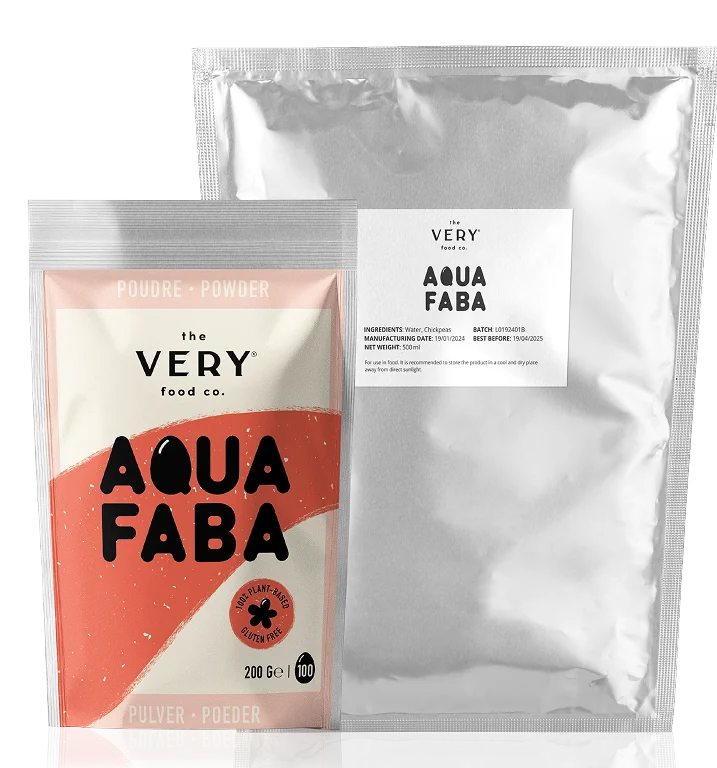
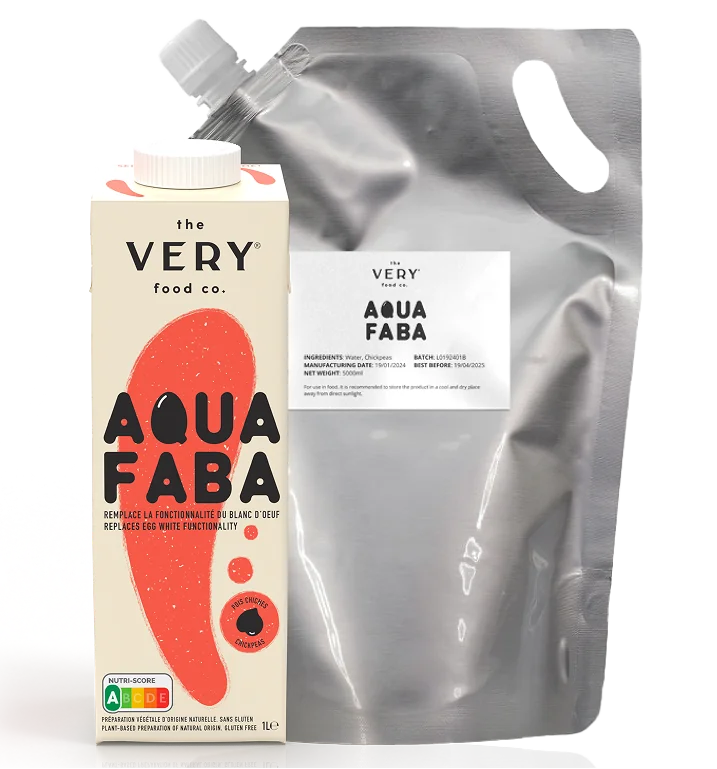
Review the finished-food label when the formula changes. VERY AQUAFABA lists water and chickpeas as its ingredients, and it contains no egg, dairy, gluten, or soy. Those points describe the aquafaba ingredient, not every ingredient in the food you make.
Check your own label rules and every other ingredient before deciding how to describe the finished product. Chickpea is not one of the 14 allergens covered by EU mandatory allergen labelling, but chickpea and other legume allergies can exist. Anyone with a known chickpea or legume allergy should still avoid it. Review what the technical sheet covers before requesting the product information needed for your records.
How do you run the trial before the switch?
Run the proposed formula beside your existing one, using the same product format and your own acceptance checks. Record the aquafaba dose, the adjustment to other liquids, processing conditions, batch handling, and the finished-product points you need to review. This gives you a working record before any production change.
Professional projects follow four steps: exploration, specification, a trial in your product with your criteria, then quote and supply after a validated trial through the distributor for your country. TDS and COA are sent on request with a qualified enquiry, and a sample is provided in reply to that enquiry rather than from a button. See TDS and COA and aquafaba in food manufacturing when you prepare the trial brief.
How do you plan the switchover?
Treat the validated trial as a change-control point. Confirm the approved formula, label artwork, and records before retiring the egg version. Then align purchasing and supply timing with the distributor for your country.
Keep the approved sample and trial observations with the formulation record so the production run uses the version you assessed. If you need to clarify the input and documentation route, send an enquiry with the product type and the egg function you are replacing. We can then provide the technical documents on request through a qualified enquiry and discuss the next step around your trial.
Write down the egg function, current egg weight, batch liquid total, and label wording now in use. Then set one trial brief for the product you sell, including the acceptance checks you will apply. When that brief is ready, send an enquiry with those details to request the specification documents and discuss a sample.
Where to buy VERY AQUAFABA