Professionals
Egg-free pastries: rolling out aquafaba across a bakery chain
A formula that works in one shop still has to survive production cards, ordering and customer questions in every other shop. Start by trialing one pastry in one shop, write its card with aquafaba in grams, then roll it out after it meets your checks.
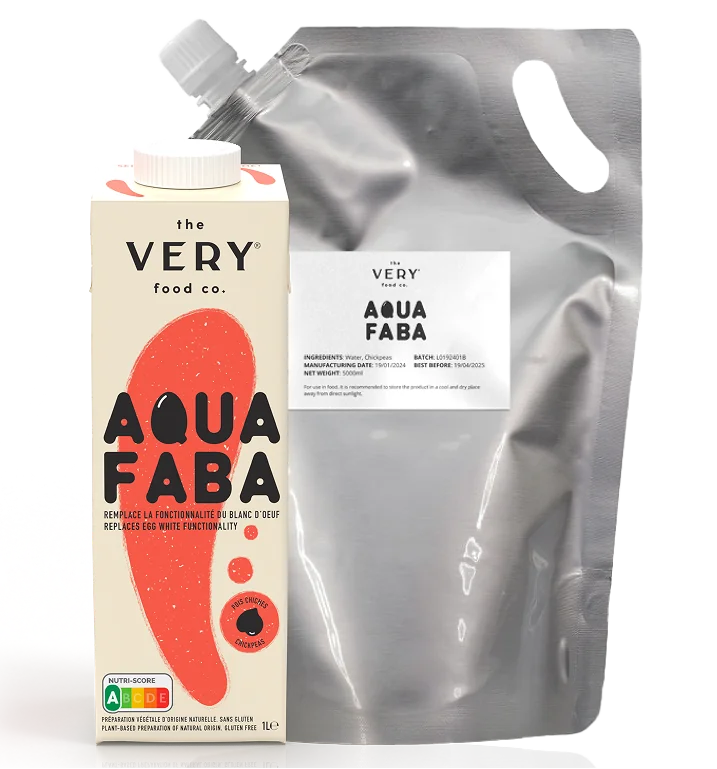
For the rollout, choose a product with a clear egg-white role, lock the gram weight, and give every shop the same handling instruction. 30g of liquid VERY AQUAFABA replaces one egg white. That rule gives the card a unit your bakers can weigh, rather than a variable egg count.
We recommend beginning with one repeatable line, then moving through the formula, supply route and counter wording in that order. This keeps the rollout on the work each shop does, from mixing to display.
Updated: .

Which products do you roll out first?
Begin where egg white has a defined job in the current method and where the product is made often enough for the trial to be observed in normal production. Do not change several pastries at once. A single formula lets you see whether the card, method and finished item are clear to the baker making it.
Pick one shop that can run the product through its usual prep, bake and display routine. Record the aquafaba in grams, the method stage where it enters and the sign-off points you already use. If the role is a whole egg or yolk rather than egg white, the conversion changes: one whole egg is 45g, while one egg yolk is 15g of aquafaba plus 10g of oil.
How do you keep the recipe the same in every shop?
Your recipe card has to remove judgment calls at the bench. Name the format, the weight in grams, the stage of the method and the handling instruction. Write liquid VERY AQUAFABA and 30g for each egg white being replaced, rather than asking bakers to convert eggs during prep.
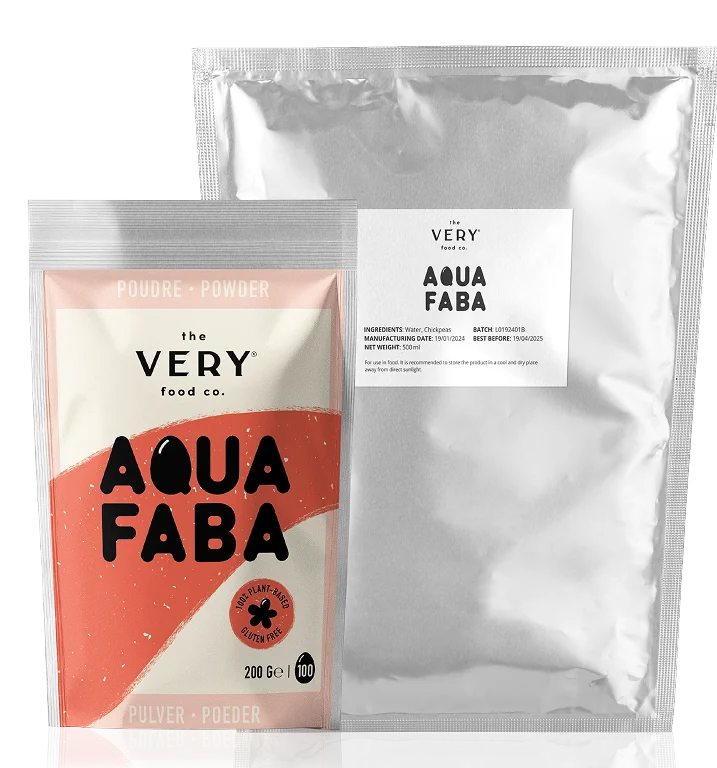
Keep one approved master card and issue the same version to every shop. If you use powder, state the make-up method on that card: 2g of powder with 30 ml of water makes 32g of aquafaba and replaces one egg white. Keep the trial record with the card, so a change to an ingredient or method can be reviewed before it reaches other shops.
How do you supply each shop?
Set each shop's order pattern after the single-shop trial, using the quantities on its approved card and its own production rhythm. For liquid format, opened stock keeps 3 to 4 days at 2 to 6 °C. Make that storage window part of the shop instruction before you decide order frequency.
Unopened liquid and powder keep at least 12 months at room temperature. Opened powder, kept dry and closed, keeps until its best-before date. We serve every country through distributors. For a chain operating in more than one country, tell us the countries and formats needed when you contact us.
How do you describe the products to customers?
Counter wording should say what has actually been checked. You can describe VERY AQUAFABA itself as plant-based and egg-free. Do not describe the finished pastry as vegan until every ingredient in that recipe has been checked.
Keep allergen language just as narrow. VERY AQUAFABA contains no egg, dairy, gluten or soy. Chickpea is not one of the 14 allergens covered by EU mandatory allergen labelling, but chickpea and other legume allergies can exist. Check every ingredient in the pastry before making an allergen statement, and do not use a broad allergen-free claim for the pastry.
Choose one product and one shop. Put the aquafaba weight and handling notes on a trial card, then run it through your usual checks. When the formula is ready to discuss, send the product, format and countries involved in an enquiry.
Where to buy VERY AQUAFABA