Process sheet
How to make an aquafaba pavlova: process sheet
Use this sheet at the station once the recipe quantities are weighed. For a different number of bases, scale the ingredients first. The sequence and the reference states stay the same: 150g of aquafaba at 4 °C, 150g of sugar, 110 °C for 1.5 to 2 hours. Updated: .
Process sheet
| # | Step | Reference | Your batch |
|---|---|---|---|
| 1 | Chill the aquafaba | 150g at 4 °C per base | |
| 2 | Whip to soft peaks | Clean, grease-free bowl | |
| 3 | Add the optional stabiliser | 2g cream of tartar or 1g citric acid | |
| 4 | Add the sugar gradually | 150g, to glossy stiff peaks | |
| 5 | Fold in the starch and the acid | 5g + 5g | |
| 6 | Shape the base | 20 cm disc with raised edges | |
| 7 | Dry | 110 °C, fan off, 1.5 to 2 hours | |
| 8 | Cool | Oven off, door ajar | |
| 9 | Store or assemble | Airtight up to 1 day; top at service |
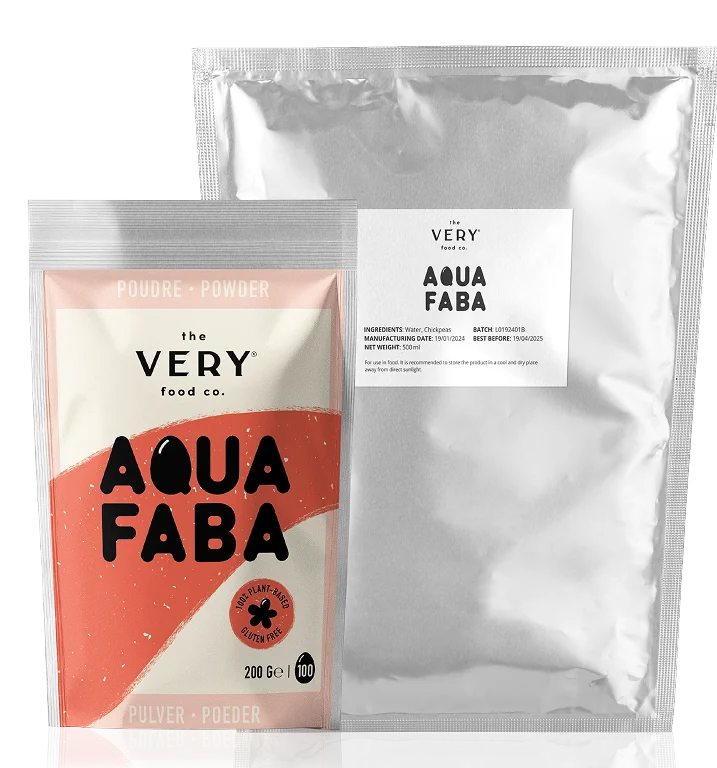
Powder: make up 10g with 150 ml of water per base and chill it before step 1.
Checks
| What you see | Why | Fix |
|---|---|---|
| Foam does not reach volume | Temperature and grease | Chill the aquafaba and use clean equipment |
| Meringue stays loose | Peak stage and sugar addition | Continue according to the recipe before shaping |
| Shell cracks while cooling | Cooling speed | Leave it in the switched-off oven with the door ajar |
| Centre is soft throughout | Drying time | The full 1.5 to 2 hours |
| Base dries through | Starch, acid and drying time | Fold them in; pull the base at the reference time while the centre still gives |
| Base softens after topping | Topping time | Assemble at service |
Source: VERY AQUAFABA, Pavlova with Aquafaba (October 2026)
What should you have ready before whipping?
Before you start the mixer: chill the aquafaba, weigh the sugar, measure the starch and the acid, line the tray, mark the 20 cm circle, and heat the oven to 110 °C with the fan off. Once the foam is ready, move directly into the next stage.
Scale the quantities first when you are making more than one base; the pavlova method has the recipe and what goes wrong.
What a good base looks like at each step
Soft peaks that lean, then firm peaks that stand. After the sugar, a meringue that is glossy and dense. After the fold, the same meringue, barely moved. Out of the oven, a shell that is dry and pale over a centre that gives slightly under the finger. Cooled, a base with no crack across the top. Assembled, a crisp edge under the cream right up to service.
Tick each step as its state is reached, not as it is done. A step whose state is not there is the moment to stop and check, before the next one hides it.