Reference
Is aquafaba just chickpea water?
Yes, aquafaba is chickpea cooking water; in a professional pack, the difference is that it is filtered and standardised.
At a bar station or pastry bench, you may know it as the liquid from a can of chickpeas, ready to shake into a sour or fold into a meringue. Aquafaba, chickpea water and chickpea brine are names for the same cooking liquid.
What changes is consistency. Liquid from a can can vary, while VERY AQUAFABA is prepared to behave the same from batch to batch. It is made from water and chickpeas, then filtered, refined and standardised. Use 30g of liquid VERY AQUAFABA for 1 egg white. That gives you a clear starting point when you are moving a familiar recipe from eggs or canned liquid. The rest comes down to the texture your recipe needs and the volume you make.
Updated: .
Is aquafaba the same as the liquid in a can of chickpeas?
A can gives you chickpea cooking water, so it counts as aquafaba. You may also hear it called chickpea water or chickpea brine. Those names describe the same liquid, whether you save it after cooking chickpeas or pour it from a can.
The difference is not the name. Canned liquid can vary from can to can. That means its behaviour can change when you whip it, shake it or add it to a batter. A ready-made professional aquafaba still begins with chickpea cooking water, but it is filtered, refined and standardised before it reaches your station. It is not a different ingredient, it is a controlled version of the same one.
What changes when it is made for professional use?
During a busy service or production run, you need the measure in the recipe to mean the same thing each time. We filter, refine and standardise chickpea cooking water so it performs the same from batch to batch. That separates a professional pack from a can whose liquid may vary.
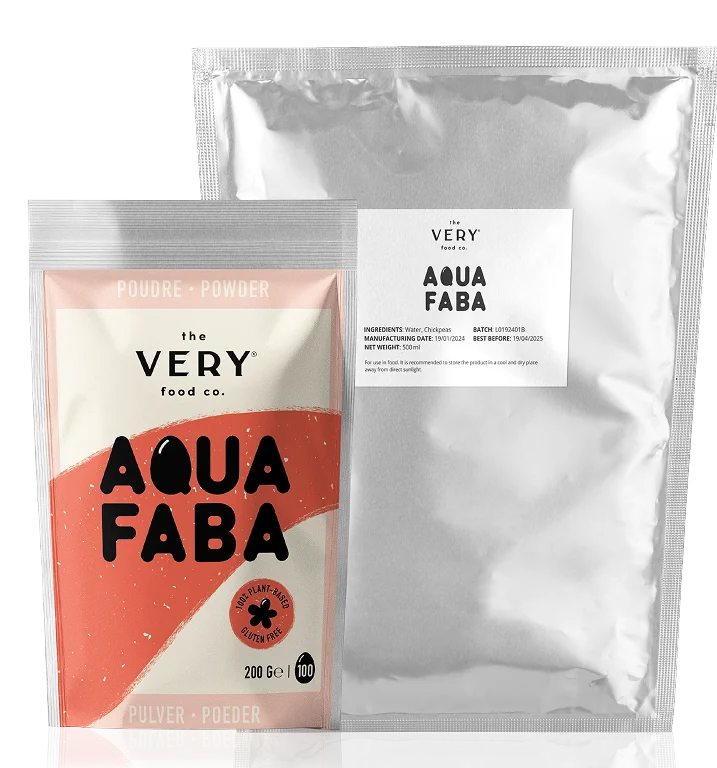
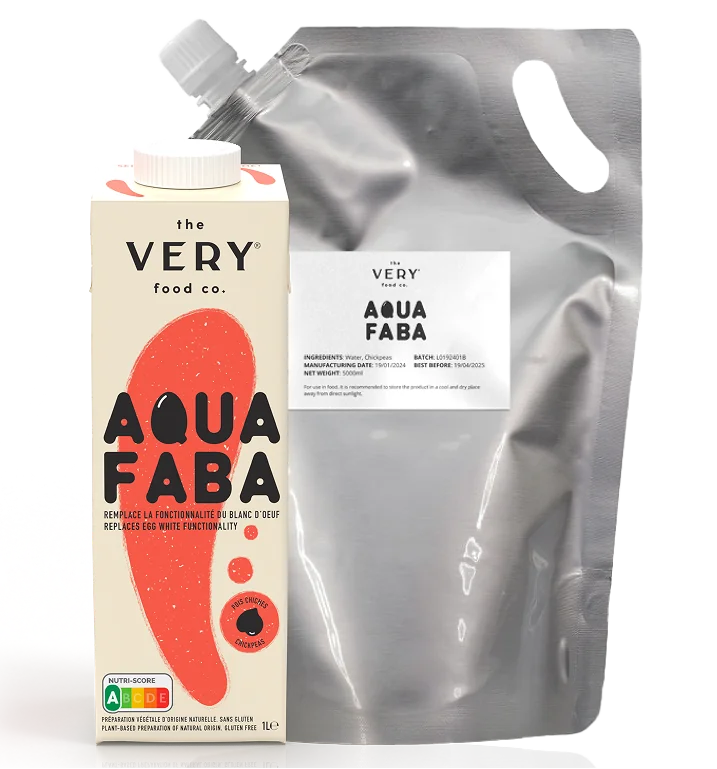
You can choose the format around how you work. A 1L Tetrapak replaces 33 egg whites, while a 10L bag-in-box replaces 330. For dry storage and measured mixing, the 200g powder pouch takes 3L of water and makes 3.2kg. The ingredient remains water and chickpeas, whether you choose liquid or powder.
Can you use it in the same recipes?
Aquafaba can foam in meringue, mousse, cocktails and macarons. It can emulsify mayonnaise and bind baking mixtures. If a recipe uses an egg white, start with the direct liquid swap: 1 egg white equals 30g of liquid VERY AQUAFABA.
For a whole egg, use 45g. For a yolk where you need the richness it brings, use 15g of aquafaba plus 10g of oil. These are starting ratios for recipes already written around eggs. Follow the method your recipe uses, then judge the mixture at the stage that matters, whether that is a foam in the shaker, a meringue or a batter.
When does a ready-made pack make sense?
Ready-made liquid makes sense when canned liquid is no longer practical for the way you produce drinks or food. You may need a consistent dose for repeated recipes, a larger format for a central kitchen, or a pack that fits your storage routine. Liquid comes in 1L Tetrapak, 10L bag-in-box and 1T IBC formats.
Keep unopened liquid or powder at room temperature for at least 12 months. Once opened, keep liquid at 2 to 6 °C for 3 to 4 days and mark the opening date. Keep opened powder dry and closed until the best-before date on the pouch. Choose the format after you know how much you will use within that opened period.
Start with a recipe you already know, then weigh 30g of liquid VERY AQUAFABA in place of one egg white. If you make that recipe repeatedly, compare the pack format with the amount you can use after opening. When you are ready to order, select liquid or powder around your production routine.
Where to buy VERY AQUAFABA