Aquafaba 101
What is Aquafaba?
Aquafaba is the culinary term for the liquid obtained from cooked legumes, especially chickpeas. It has become an essential tool in modern professional kitchens thanks to its unique ability to replicate the functional properties of egg whites — particularly foaming, binding, and emulsifying.
Originally popularised by chefs and food scientists in 2014, aquafaba is now used extensively in patisserie, baking, food manufacturing, and gastronomy. Because it is derived from legumes, it is naturally free from animal products, cholesterol, and common allergens like eggs and dairy.
Functional Properties
Aquafaba works thanks to its mixture of soluble proteins, starches, and fibres that migrate into the cooking water. When whipped or incorporated into recipes, these components provide structure and stability comparable to eggs.
Key functional roles:
- Foaming: Whips into stable foams, ideal for aquafaba meringues, mousses, or foamed cocktails.
- Emulsifying: Creates stable emulsions, perfect for sauces such as aquafaba mayonnaise or dressings.
- Binding: Improves cohesion in doughs, batters, and savoury mixes such as plant-based patties.
- Moisture retention: Enhances softness and shelf life in baked goods.
This makes aquafaba a multi-functional, versatile ingredient that can often replace both whole eggs and egg whites in recipes.
Typical Culinary Applications
Aquafaba can be applied across a wide range of professional contexts. Some of the most common aquafaba uses include:
- Patisserie and desserts: meringues, macarons, sponge cakes, chocolate mousse
- Sauces and dressings: mayonnaise, hollandaise-style sauces, aioli
- Foamed beverages: cocktails (such as whiskey sour with aquafaba) or coffee foam
- Bakery products: enriched doughs, soft breads, cakes, cookies
- Prepared foods: as a binder in plant-based burgers, fritters, or meat alternatives
Because of its neutral taste and colour, it blends seamlessly into both sweet and savoury preparations.
Nutritional and Label Advantages
Aquafaba offers several key advantages from a formulation perspective:
- Naturally free from cholesterol and saturated fat
- Allergen-free (no eggs, dairy, or gluten)
- Suitable for plant-based, clean-label, and allergen-sensitive products
- Contributes functional proteins that provide aeration, emulsification, and water binding
This makes it an attractive solution for professionals developing products that must meet nutritional claims and regulatory standards without compromising performance.
Sustainability and Operational Benefits
Aquafaba also contributes to more sustainable and efficient operations:
- Upcycling potential: Turns what was once discarded cooking water into a valuable ingredient
- Reduces waste: Enables egg-free formulations without leftover yolks
- Stable supply: Legume production is less resource-intensive than egg farming
- Portionable and consistent: Easy to standardise in production workflows
This translates to greater operational consistency, lower ingredient volatility, and improved sustainability credentials.
How to Start Using Aquafaba
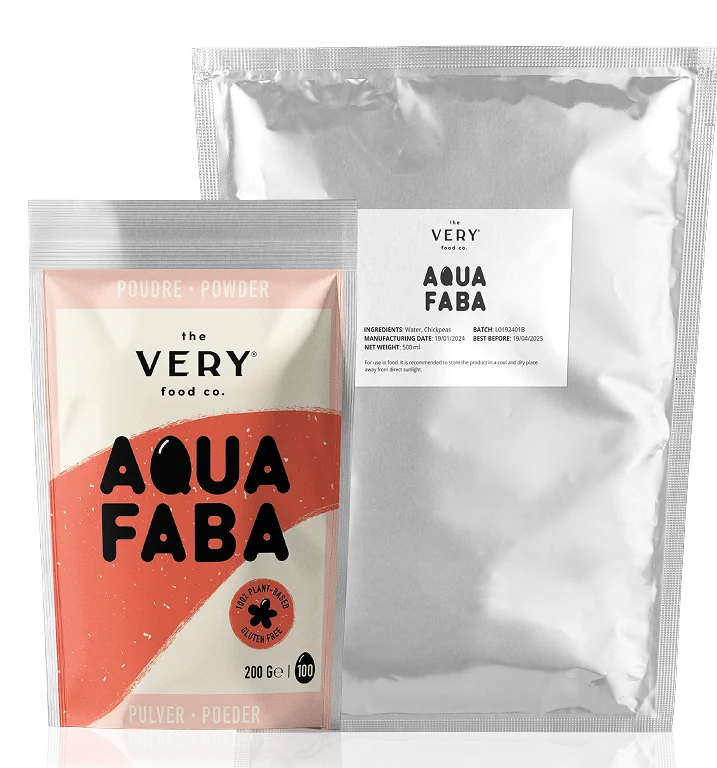
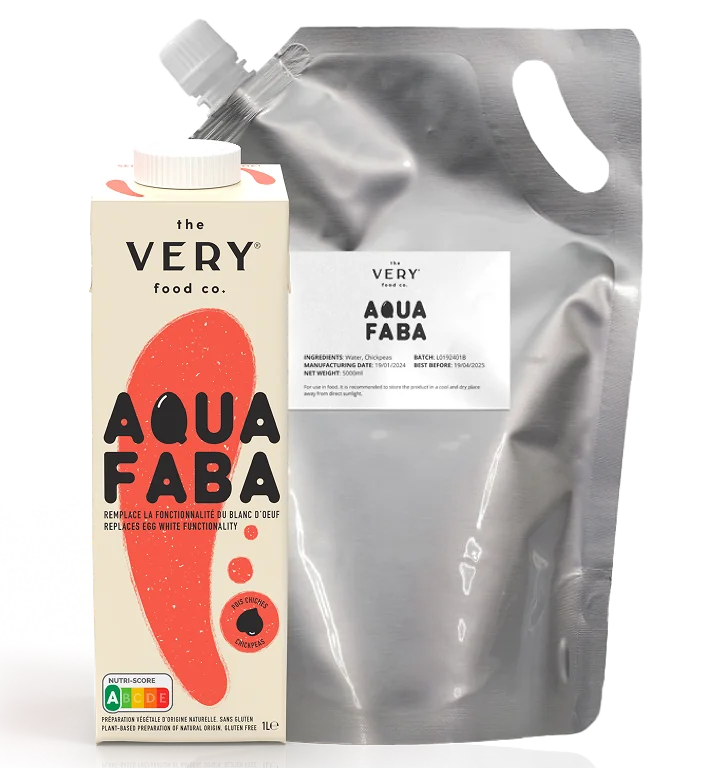
Aquafaba can be produced by making it from chickpeas or by using a ready-to-use format. For formulation and recipe development, typical conversion values are:
- 45 g aquafaba ≈ 1 whole egg
- 30 g aquafaba ≈ 1 egg white
For best performance:
- Use chilled aquafaba for maximum foam volume
- Whip at high speed and add stabilisers (e.g. cream of tartar) for greater foam stability
- Reduce liquid slightly if it appears too thin for your application
Explore our collection of aquafaba recipes to see how it can be incorporated into both sweet and savoury creations.
Key Takeaways
- Aquafaba is the viscous liquid from cooked chickpeas
- It replicates the foaming, binding, and emulsifying properties of eggs
- It is used widely in baking, patisserie, sauces, beverages, and prepared foods
- It is allergen-free, plant-based, and fits clean-label product development
- It is a versatile, consistent, and sustainable ingredient for professionals