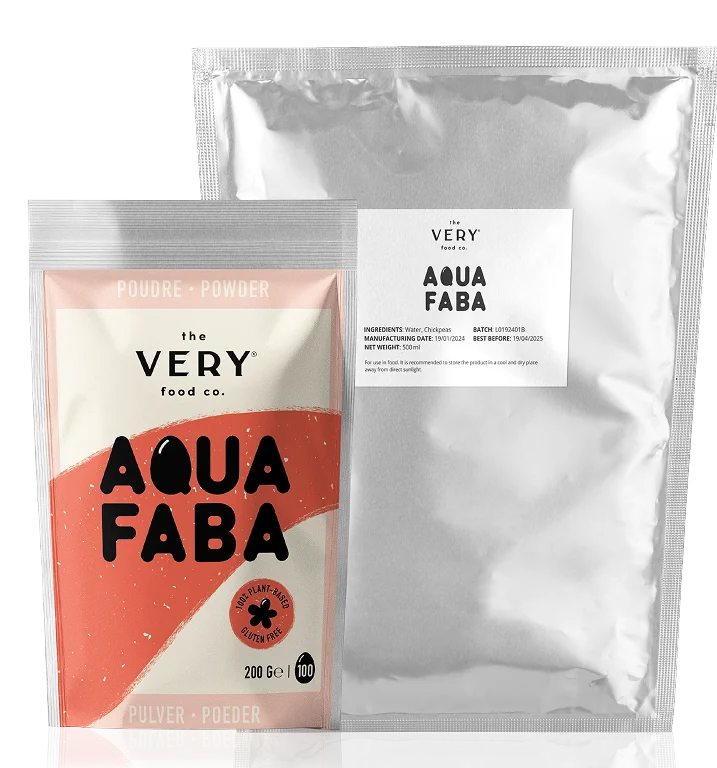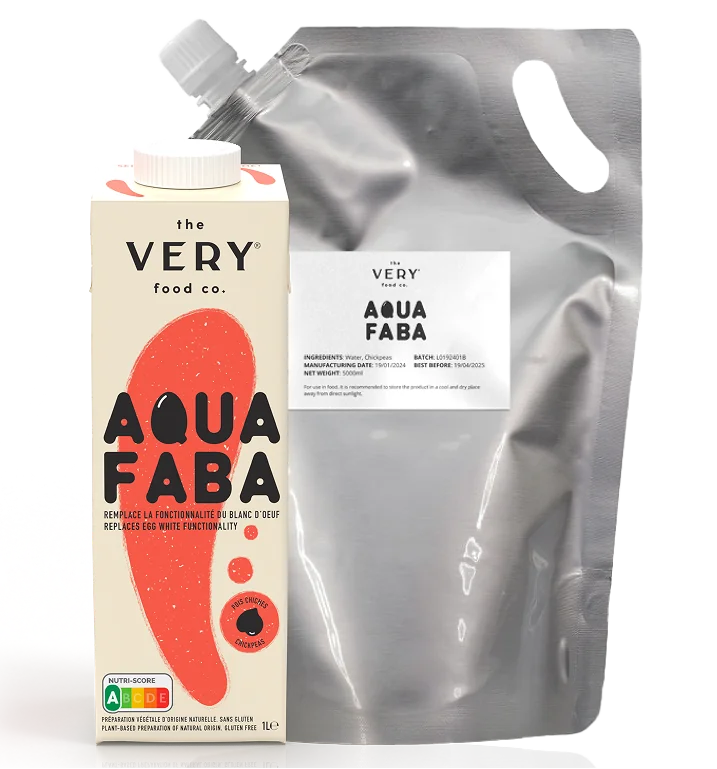
Aquafaba powder
What is aquafaba powder, and how do you use it?
Aquafaba powder is aquafaba dried into a powder. Mix 2g of powder with 30 ml of water to make 32g of aquafaba, the same as 32g of liquid and enough to replace one egg white. You might be setting up a small pastry run, a few cocktails, or a test bake and need only the amount in front of you.
Rather than opening a larger liquid pack, you weigh the powder, make it up with water, and use it as you would liquid aquafaba. It can foam for meringue, mousse, cocktails and macarons, emulsify mayonnaise, and bind baking mixes. The choice comes down to how much you need now, how often you use it, and how you store the open pouch.
Updated: .
What is in the pouch?
The powder begins as chickpea aquafaba. We make our liquid aquafaba from the cooking water of chickpeas, then filter, refine and standardise it so it performs the same from batch to batch. The dried version is aquafaba powder, and the 200g pouch lists water and chickpeas as its ingredients.
It is an ingredient for preparation, not a dry finishing powder. Its job begins after you add water. Once made up, it has the same working role as liquid aquafaba: it can create foam, help form an emulsion, or bind a baking mix. Keep the opened pouch dry and closed.
How do you turn it back into aquafaba?
Treat powder as a measured ingredient at prep. Do not add it dry to a shaker, mixer, batter, or any other recipe. Make up only the amount your batch needs:
- Weigh the powder.
- Add the measured water.
- Use the made-up aquafaba as you would the liquid.
For one egg white, weigh 2g of powder and add 30 ml of water. For a whole egg, use 3g with 45 ml of water. For a yolk, use 1g with 15 ml of water, plus 10g of oil.
When does powder suit you better than liquid?
Powder suits a station where demand changes from one service or bake to the next. You can make a small amount, keep the rest of the pouch dry and closed, and use it until the best-before date. That can suit occasional production, smaller batches, and limited fridge space.
It also changes what you move. For each egg-white replacement, powder is 2g while liquid is 30g, and powder is cheaper to transport than liquid. Choose liquid when you want ready-made aquafaba at hand. An opened liquid pack needs refrigeration at 2 to 6 °C and keeps for 3 to 4 days, so mark the opening date.
Which pouch do you start with?
Start with the pouch that matches the amount you expect to make up. A 30g pouch replaces 15 egg whites, so it suits a first trial, a short production run, or occasional use. If you are seeing powder for the first time and do not have a larger batch planned, it gives you a manageable starting amount.
For recurring prep, a 200g pouch replaces 100 egg whites. A full pouch takes 3L of water and makes 3.2kg of aquafaba. The 3kg pouch replaces 1,500 egg whites and takes 45L of water to make 48kg, which suits high-volume production.
Start with the next batch you have planned. Count the egg-white replacements, weigh only the powder required, and add the matching water before you mix. If you need a full-pouch preparation, check the pouch size against your storage and production schedule, then select the format that fits that batch.
Where to buy VERY AQUAFABA