Professionals
What institutional kitchens should check before buying aquafaba
Before you buy aquafaba for an institutional kitchen, check the technical documents, storage rules, shelf life, format and ordering route. At receiving, a missed document, unclear pack status or the wrong format can interrupt a planned production run. Put these checks in the same purchasing file you use for product approval.
Set one storage rule: opened liquid belongs in chilled storage for 3 to 4 days at 2 to 6 °C. That rule affects which format you can hold, how you rotate stock and what your kitchen records after opening. This checklist takes you from the document request to order planning. The checks also separate unopened stock from packs already in use, so each decision has a clear operational basis.
Updated: .

Which documents do you ask for?
Ask for the TDS and COA before you approve aquafaba for use. We send both documents on request when you submit a qualified enquiry. Keep them with the specification and approval record for the format you intend to buy.
The TDS and COA are not published, so build the request into your normal purchasing process. Record the request, receipt and review of each item. This gives you a clear file for the product before it reaches your store.
| Check | What to record |
|---|---|
| TDS | Requested, received and reviewed |
| COA | Requested with the qualified enquiry |
| Specification | Your kitchen's required product details |
| Format | The format linked to the approval record |
How do you check storage and shelf life?
Separate unopened inventory from product already in use. Unopened liquid aquafaba and powder keep for at least 12 months at room temperature. Check the best-before date during receiving and enter it into the stock record your kitchen uses.
Opened liquid needs a different routine. Keep it at 2 to 6 °C and plan it for use within 3 to 4 days. Mark the opening date on the pack or your production record.
Opened powder follows its own rule. Keep it dry and closed, and it keeps until the best-before date. This distinction matters when you compare liquid and powder for the way your kitchen holds ingredients.
Which format suits your volumes?
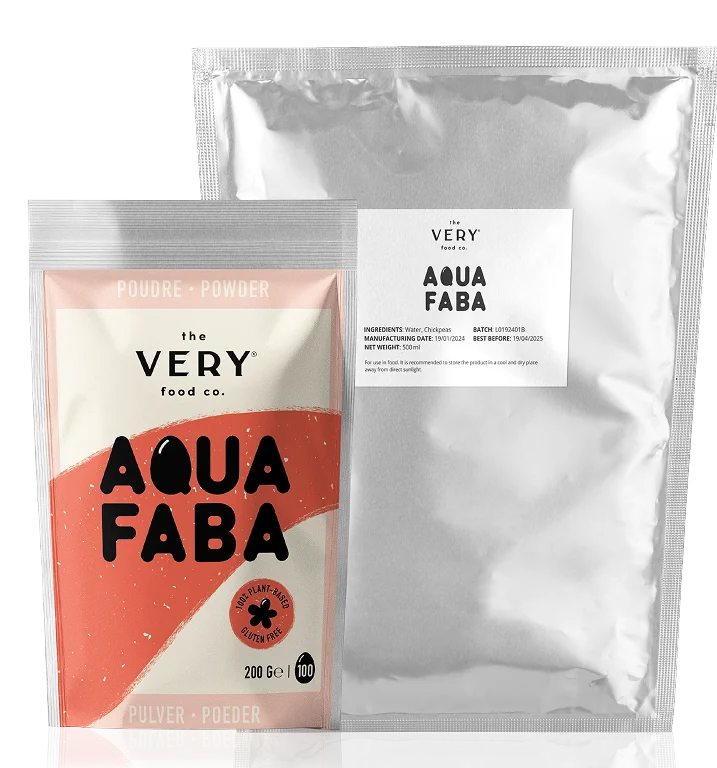
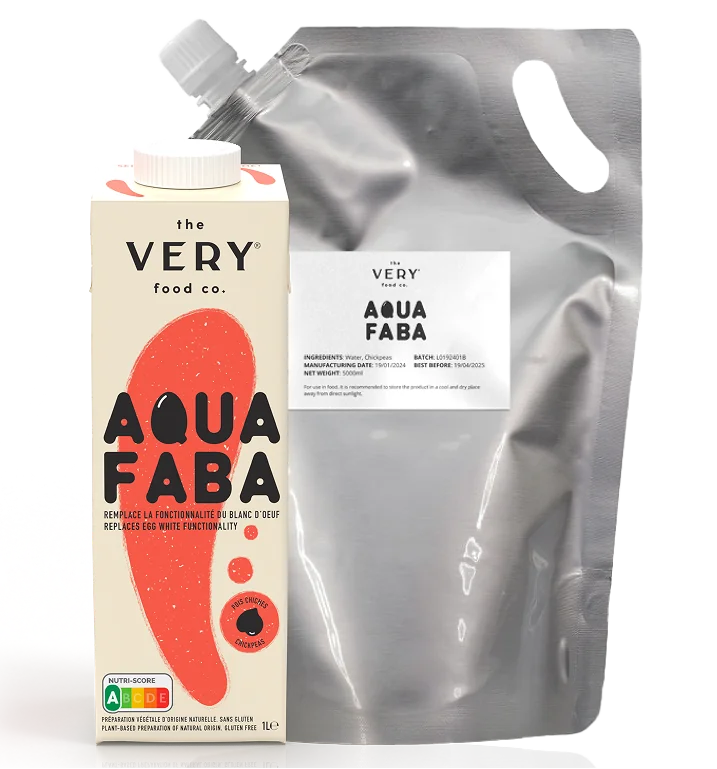
Choose the format against the quantity you expect to put into production while the pack is open. Start with your planned usage, then compare it with the storage rule for opened liquid or powder. The replacement figures give you a practical way to map each format to the volume you are assessing.
- 1L Tetrapak replaces 33 egg whites.
- 10L bag-in-box replaces 330 egg whites.
- 1T IBC replaces 33,000 egg whites.
- 30g powder replaces 15 egg whites.
- 200g powder replaces 100 egg whites.
- 3kg powder replaces 1,500 egg whites.
A format can be reviewed alongside your opening frequency, chilled storage space and production schedule. Keep the chosen format in the approval record so the ordered pack matches the format your kitchen has assessed.
How do you order?
Start the order process with a qualified enquiry through the contact form. Include the format you are assessing, the documents required for your approval file and whether you are planning a single delivery or recurring orders. That gives us the details needed to direct the request correctly.
We serve every country through distributors. We reply within two working days, then the request can move forward with the distributor serving your country.
Keep the final format, storage arrangement and order rhythm aligned with the checks already made. If your purchase record needs the TDS and COA, request them as part of the same enquiry rather than after delivery planning has started.
List the format or formats you are assessing, your expected use, the storage point for opened product and the documents required in your approval file. Then send a qualified enquiry through the contact form. We can direct the request through the distributor serving your country and reply within two working days.
Where to buy VERY AQUAFABA