Professionals
How to replace egg whites with aquafaba on a cocktail menu
At the first busy service after a menu change, replace every sour that uses egg white with 20 ml of VERY AQUAFABA. Dry shake it for 10 to 15 seconds without ice, then for 10 to 15 seconds with ice, so the station routine stays familiar.
That rule covers the egg-white builds already on your list, from a house sour to a Pisco Sour, and gives you the same jigger measure for each specification. Start by mapping every egg-white drink, then rewrite the line item rather than redesigning the drink. You can retain the spirit, citrus and sweetener build you already serve, while documenting the foamer and shake sequence beside it. For a seasonal bar, the same menu decision also changes what you hold during quieter weeks. Make the change one drink at a time: audit the list, edit the specification, rewrite the menu line, then adjust stock.
Updated: .

Which drinks on your menu use egg white?
Pull the current spec book or POS build and mark each drink where egg white appears. Look beyond drinks called a sour: a Whiskey Sour, Amaretto Sour, Gin Fizz and White Lady are familiar places to check, alongside house signatures and short seasonal serves. Do not add a foamer to drinks that never called for egg white. The aim is to replace the ingredient where the existing build needs it.
Create one audit line for every affected drink: drink name, current spirit, acid, sweetener, egg white, glass and method. This shows what stays fixed when you remove egg white. The whiskey sour and amaretto sour give two useful specifications to review before editing your own list.
How do you rewrite each specification?
Change the foamer line in each affected specification to 20 ml of VERY AQUAFABA, measured with a jigger. Leave the rest of that drink’s stated build in place unless you are making a separate recipe decision. A Pisco Sour provides a clear template: 40 ml pisco, 20 ml lime juice, 20 ml cane syrup and 20 ml VERY AQUAFABA.
Write the method under the ingredients: dry shake for 10 to 15 seconds without ice, then shake for 10 to 15 seconds with ice. Run the sour test in your bar on every revised drink before it returns to the list. This lets you compare the written build with the served drink instead of relying on a memory of the old specification.
What do you tell guests on the menu?
Your menu can name aquafaba plainly and describe the drink’s actual ingredients. For example: “Pisco Sour, pisco, lime, cane syrup and aquafaba.” That tells a guest what is in the glass without turning an ingredient note into a broad claim about the full drink.
VERY AQUAFABA contains no egg, dairy, gluten or soy. Chickpea is not among the 14 allergens covered by EU mandatory allergen labelling, but chickpea and other legume allergies can still exist. Check every other ingredient before using vegan or egg-free wording for a drink, and use the allergen question when a guest needs product detail. The light roasted note present in the pack disappears once it is shaken into a drink.
How do you plan stock through the season?
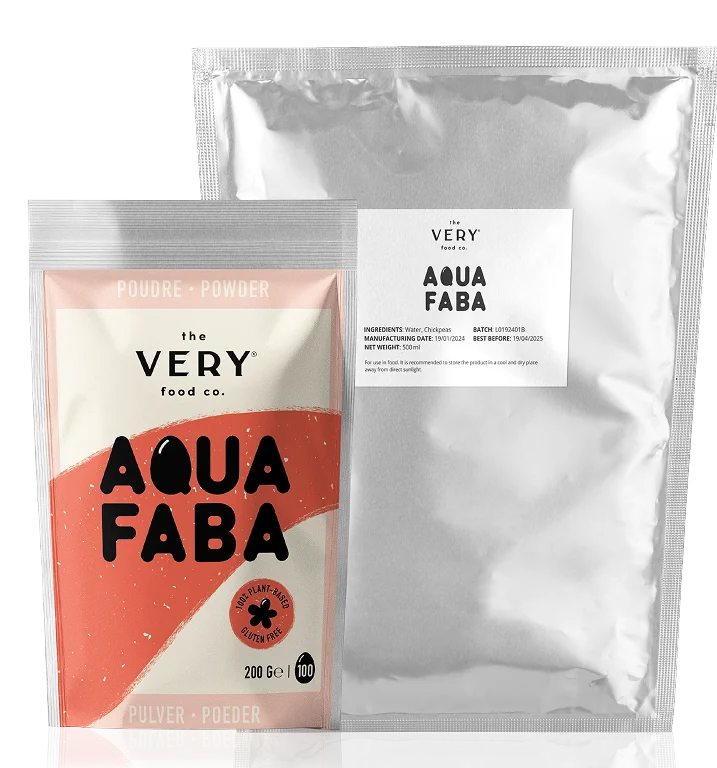
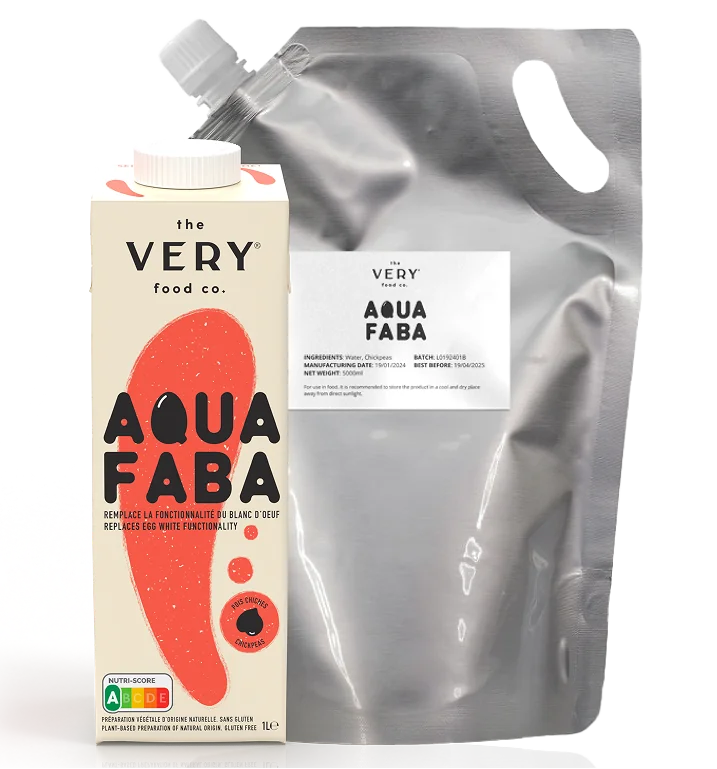
Stock should follow your service rhythm, not simply the number of sour names on the menu. A 1L Tetrapak makes 50 drinks at 20 ml per serve. Once opened, liquid keeps 3 to 4 days at 2 to 6 °C, while unopened liquid and powder keep for at least 12 months at room temperature.
For a seasonal bar, liquid can suit an active run of sour orders. During quieter months, aquafaba powder in cocktails lets you make up only what service needs: 2g of powder mixed with 30 ml of water makes 32g of aquafaba, and made-up powder is used at the same 20 ml measure. Keep opened powder dry and closed until its best-before date. Use the bar reorder planner alongside your expected service pattern.
Take one egg-white sour from your current list, change its foamer line to 20 ml, and serve it through the written dry-shake and ice-shake sequence. Then run the sour test in your bar. If you need to discuss formats for your service pattern, send an enquiry.
Where to buy VERY AQUAFABA