Professionals
How to plan egg-free desserts across a catering menu cycle
As you close the next menu cycle, plan egg-free desserts by mapping every recipe where egg creates structure, foam or a finish. Then set the batch size, format and service date before the production sheet goes out.
For opened liquid, build production around 3 to 4 days at 2 to 6 °C. That rule keeps the pastry list tied to the stock routine, rather than adding an egg-free dessert as a late exception. Start with the dishes you already serve, such as mousse or meringue, and decide which ones need an egg-free version in the rotation. You can then match confirmed covers to a tested batch, keep opened formats visible in the chiller or dry store, and describe the finished dessert without making a claim the full recipe does not support.
Updated: .

Which desserts in the cycle use egg?
Begin at the pastry section of the existing rota. Mark each dessert where egg provides foam, structure, coating or a visible finish. This stops you treating every recipe as the same swap. Mousse and meringue give you practical places to set a repeatable egg-free method.
A chocolate mousse batch uses 120g of aquafaba, 100g of sugar and 180g of chocolate for about 6 portions. It needs at least 2 hours to set, and the finished mousse keeps 3 days in the fridge. A meringue batch uses 150g of aquafaba and 150g of sugar for about 30 meringues, then bakes at 90 °C for 1.5 to 2 hours. Put these production limits beside the service day.
How do you plan the quantities across the cycle?
Plan from confirmed covers and the dessert’s role in the cycle. A plated mousse, a grab-and-go meringue and a buffet item do not draw stock in the same pattern. Keep the recipe yield, service date and any prep day together on one production sheet, then choose the format that matches the frequency of use.
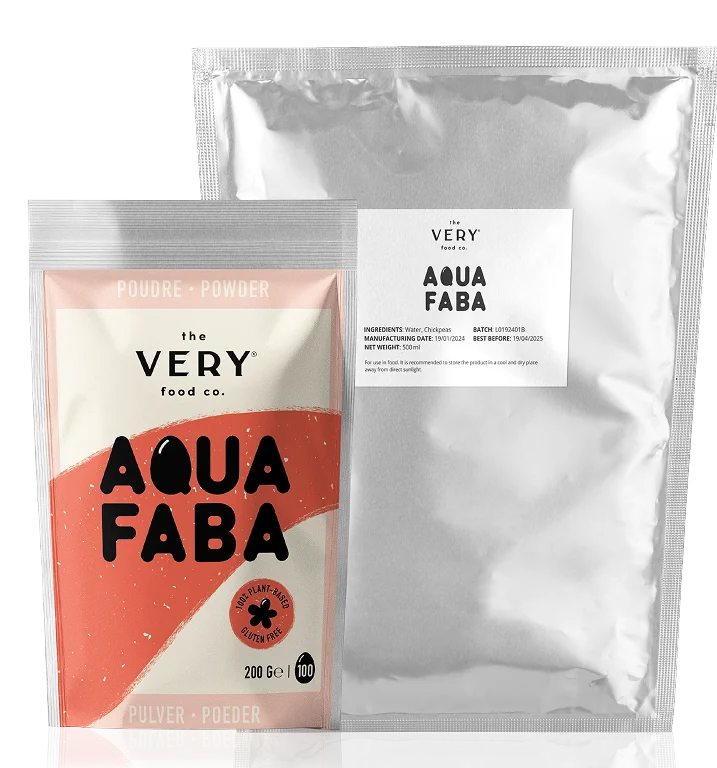
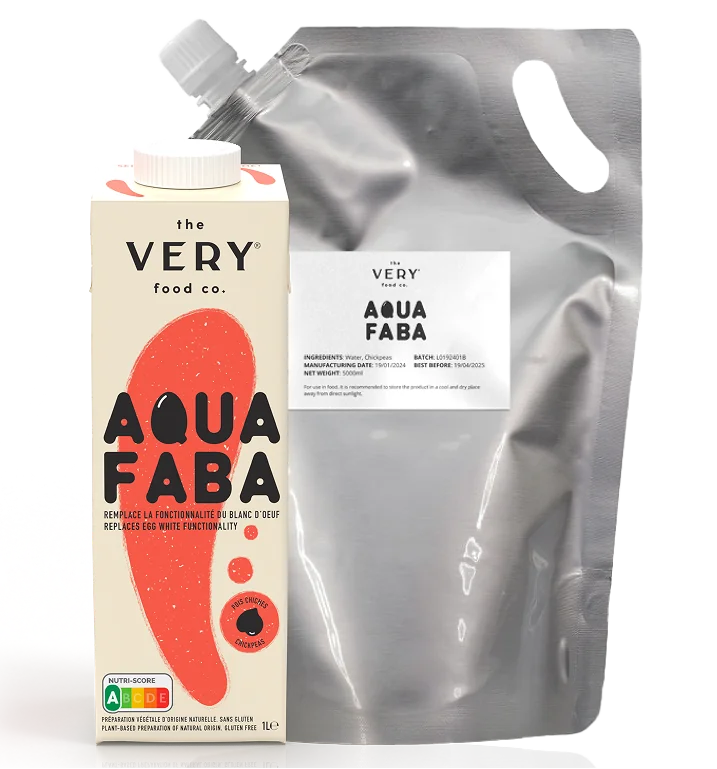
For liquid, a 1L Tetrapak replaces 33 egg whites and a 10L bag-in-box replaces 330. Powder formats are 30g for 15 egg whites, 200g for 100 egg whites and 3kg for 1,500 egg whites. Use the chocolate mousse and meringue yields as your batch reference. This lets you check the cycle before you open a format.
How do you keep opened stock within its dates?
Keep unopened and opened stock on separate checks. Unopened liquid and powder keep at least 12 months at room temperature. Once opened, liquid needs a dated label and chiller position because it keeps 3 to 4 days at 2 to 6 °C.
Match liquid to runs that will use it inside that window. If the cycle has longer gaps between pastry sessions, opened powder can remain in use until its best-before date when it stays dry and closed. Record the opening date, format and planned dessert against the batch sheet. Review that record before adding a late function or changing the dessert rotation.
How do you describe the desserts on the menu?
Name the dessert for what the full recipe contains, not for one component. “Egg-free chocolate mousse” can be clear when every ingredient in the served recipe has been checked. “Vegan” needs the same full-recipe check, including chocolate, toppings, biscuits, sauces and any garnish.
Do not use “allergen-free” for these desserts. VERY AQUAFABA contains no egg, dairy, gluten or soy, but chickpea and other legume allergies can exist. Anyone with a known chickpea allergy should still avoid it. Keep the menu name straightforward, then make sure the recipe sheet and service information match it.
Pull your next menu cycle and mark every dessert where egg sets the method or menu claim. Choose one mousse and one meringue slot, confirm covers and service dates, then map the required format against the opening and storage routine. Use the pastry section planner before you release the production sheets.
Where to buy VERY AQUAFABA