Process sheet
How to make aquafaba meringue: the step-by-step sheet
Meringue is a recipe where the difference between a good tray and a sticky one is a few degrees and a few minutes. This sheet is how you catch them: the VERY AQUAFABA meringue recipe as a checklist you print, fill in as you go, and keep. Updated: .
Process sheet
| # | Step | Reference | Your batch |
|---|---|---|---|
| 1 | Chill the aquafaba | 4 °C | |
| 2 | Degrease the bowl and the whisk | No fat, no residue | |
| 3 | Whip on high speed to soft peaks | 150g, 3 to 5 min | |
| 4 | Add the optional stabiliser while whipping | 2g cream of tartar or 1g citric acid | |
| 5 | Add the sugar on medium speed, one tablespoon at a time | 150g caster sugar | |
| 6 | Back to high speed until glossy and stiff | Stiff peaks | |
| 7 | Pipe straight away | 3 to 4 cm | |
| 8 | Dry with the fan off | 90 °C, 1.5 to 2 h | |
| 9 | Cool on the tray, then store airtight | Room temperature, desiccant pouch |
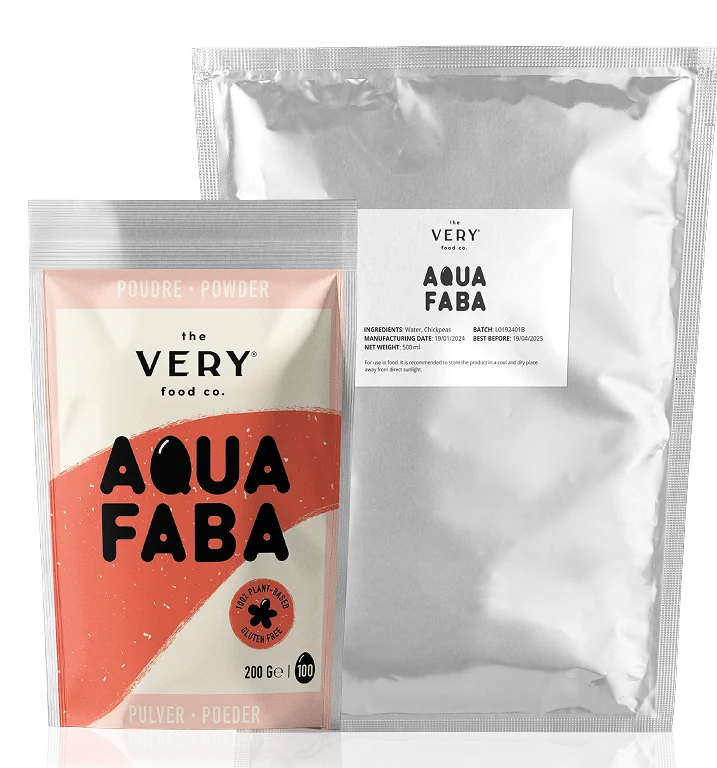
Powder: make up 10g of VERY AQUAFABA powder with 150 ml of water before step 1 and chill it to 4 °C.
Checks
| What you see | Why | Fix |
|---|---|---|
| Foam never reaches full volume | Grease on the bowl or whisk | Degrease everything before you start |
| Foam builds slowly and stays weak | Aquafaba too warm | Chill to 4 °C first |
| Syrup beads on the meringues in storage | Sugar went in faster than it could dissolve | One tablespoon at a time, at medium speed |
| Volume lost before piping | The bowl stood waiting | Pipe and dry straight after stiff peaks |
| Meringues turn soft and sticky | Meringue pulls moisture from the air | Store airtight in a dry place, with a desiccant pouch |
Source: VERY AQUAFABA, Meringues with Aquafaba (September 2026)
How to use this sheet
Print one per batch and keep it next to the mixer, with the full meringue recipe at hand if you need the method in detail. As you go, write what you actually did in the last column: the temperature the aquafaba went in at, how long it took to reach soft peaks, how long the tray stayed in the oven. Most of the time it will match the reference. When it doesn't, you have the reason on paper before anyone tastes a meringue.
Keep the filled-in sheets. A batch that failed is worth as much as one that worked, because the next baker starts from what you learned rather than finding it out again. And if a batch goes wrong and you can't see why, send us the sheet: it is the fastest way for us to help.
Before you whip aquafaba for meringue
Three things settle most meringue batches before the mixer turns on:
- The aquafaba is cold, straight from the fridge at 4 °C. Made-up powder is chilled to the same point.
- The bowl and the whisk are wiped clean. Aquafaba foam has no fat of its own, and a film of grease holds the volume short.
- The 150g of caster sugar is weighed and within reach, because it goes in one spoonful at a time and you will not want to stop to weigh it.
How to tell each step is going right
The sheet gives you the value to hit. This is how you know you have hit it, step by step:
- Step 3, soft peaks. Lift the whisk: the foam holds a shape, but the tip bends over. For the reference batch that comes at about 3 to 5 minutes on high speed. A fuller bowl takes longer, so trust the peak, not the clock.
- Step 5, the sugar. Each spoonful disappears into the foam before the next goes in. If you can feel grains against the side of the bowl, wait. Sugar that has not dissolved is what weeps out of the finished meringue in storage.
- Step 6, stiff peaks. The peak stands straight when you lift the whisk and the foam is glossy. It comes with the last of the sugar. That is your signal to pipe, not to leave the bowl for a minute.
- Step 7, piping. Rounds of 3 to 4 cm on parchment, evenly spaced. Aquafaba foam holds less well than egg white foam, so the bowl that waits while another whips loses volume.
- Step 8, drying. At 90 °C with the fan off, the meringues are not baking, they are drying. They are done when they are dry all the way through, at about 1.5 to 2 hours for this size; larger shapes need longer. A sticky centre means they came out too soon.
- Step 9, cooling. Fully cold on the tray before they are moved, then into an airtight container with a desiccant pouch if you have one. Meringue pulls moisture from the air, so the container matters as much as the oven.
On industrial batches, check each lot with a refractometer against the supplier specification of 2 to 4 °Brix, so the foam behaves the same on every run.
Where to buy VERY AQUAFABA
Professional enquiries: Discuss your production needs
General enquiries: Get in touch