Mayonnaise with Aquafaba
Mayonnaise with aquafaba is one of the most practical and widely used applications of aquafaba. It demonstrates its emulsifying properties, creating a smooth, stable sauce without eggs — ideal for foodservice and industrial production.
This formulation yields a classic cold emulsion that can be flavoured or customised as needed while remaining allergen-free and plant-based.
Ingredients (for about 500 g)
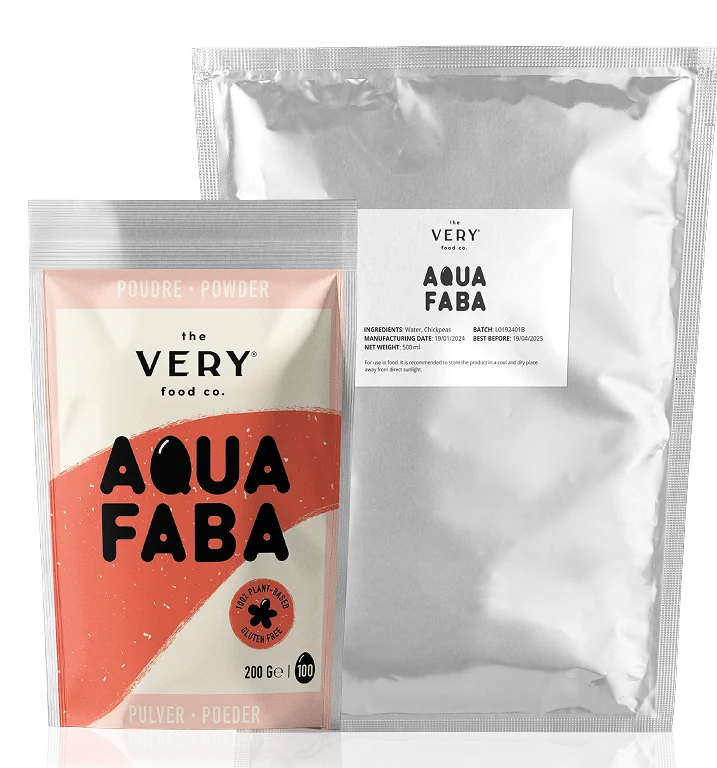
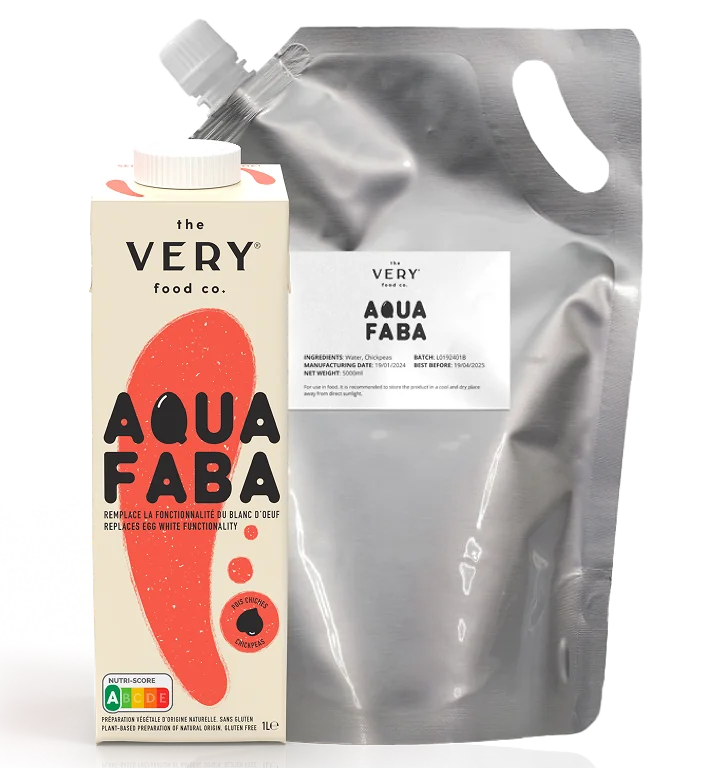
- 60 g aquafaba (well chilled)
- 10 g Dijon mustard
- 5 g salt
- 300 g neutral oil (sunflower, grapeseed, or rapeseed)
- 20 g lemon juice or white wine vinegar
- Optional: 5 g sugar, spices, or herbs for flavour variations
Method
- Prepare base: In a tall, narrow mixing vessel, combine aquafaba, mustard, salt, and acid (lemon juice or vinegar).
- Emulsify: Start blending with a stick blender (or whisk at high speed) and gradually drizzle in the oil in a thin, steady stream. Maintain high shear to initiate emulsification.
- Adjust texture: Once thickened, taste and adjust seasoning. If the emulsion becomes too thick, blend in a few grams of cold water to loosen.
- Store: Transfer to a clean container. Refrigerate immediately.
Professional Tips
- Use chilled aquafaba (4–6 °C) for faster emulsification and better stability.
- The optimal oil-to-aquafaba ratio is around 5:1 by weight.
- Use a high-shear blender for large batches to ensure droplet size control and stable emulsions.
- Shelf life: up to 7 days refrigerated at ≤4 °C under hygienic conditions.
Key Takeaways
- Aquafaba creates stable emulsions comparable to egg yolks
- Produces smooth, consistent mayonnaise suitable for large-scale production
- Enables allergen-free, egg-free formulations without sacrificing texture
- Can be flavoured, coloured, or stabilised as needed for industrial applications