Professionals
How to standardize aquafaba mousse across delivery kitchens
You need each delivery kitchen to make mousse from the same instructions, weighed ingredients, and temperature checks. Use one master card built around 120g of aquafaba, 100g of sugar, and 180g of chocolate for about 6 portions, then make that card the working standard in every kitchen without pausing for local reinterpretation during a busy prep window.
The risk is not the recipe itself. It is a kitchen changing the order, folding chocolate while it is too warm, or storing an opened pack without the same handover notes. A shared card turns those choices into visible checks. This guide sets out the card, the production controls, the formats for different volumes, and the checks to use before mousse leaves each kitchen.
Updated: .

How do you write one recipe card for every kitchen?
Put the full base batch at the top, not a ratio that each kitchen must interpret. The card should state 120g aquafaba, 100g sugar and 180g chocolate, with an output of about 6 portions. Name the bowl size only if it is identical across sites, otherwise describe the observable stage.
Put the method in production order: melt the chocolate at 45 to 50 °C, whip the aquafaba for 3 to 4 minutes, then fold only when the chocolate reaches 35 °C or lower. End with a minimum setting time of 2 hours. Leave one version-controlled file where each kitchen can access it, and remove older prints from prep stations.
How do you keep the result the same?
Consistency starts before whipping. Issue the same aquafaba format for the card, use scales for the ingredient weights, and define the same chilled holding point after folding. Record the batch date, the chocolate temperature at folding, and the time it entered refrigeration.
Keep the release check practical. Compare each batch against the agreed portion yield and setting time, then hold any batch where a recorded step is missing. Do not solve a mismatch by altering the card at one site. Record the issue, follow the shared method on the next batch, and update the master card only when the change is agreed for every kitchen.
How do you supply each kitchen?
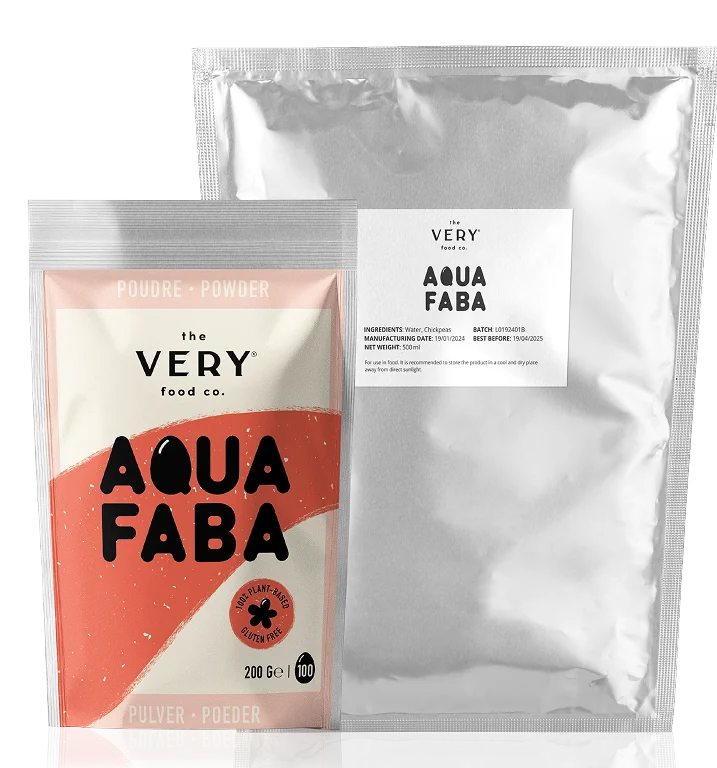
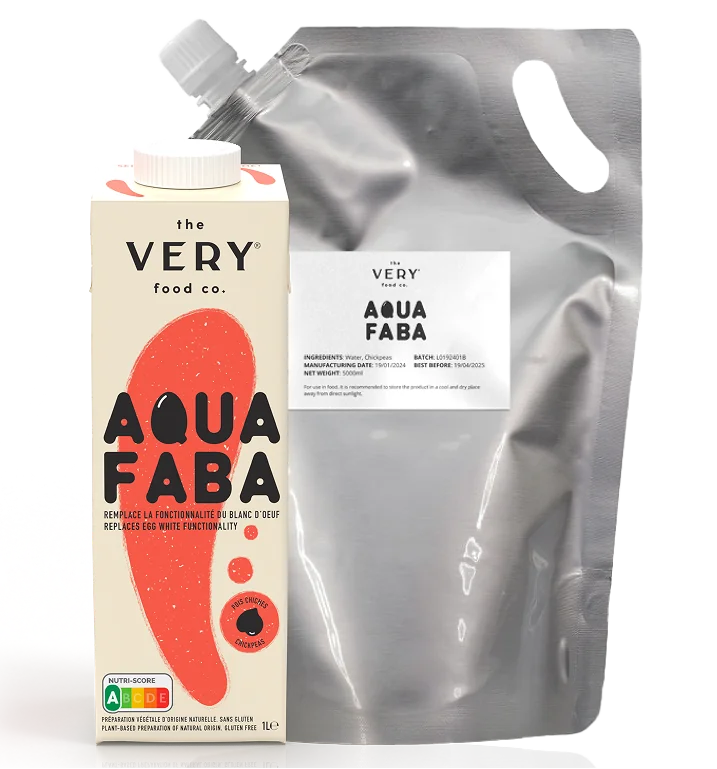
Choose the format from each kitchen's throughput and storage routine, then send the same format whenever the master card requires it. A 1L Tetrapak replaces 33 egg whites, while a 10L bag-in-box replaces 330. Powder comes in 30g, 200g and 3kg pouches, replacing 15, 100 and 1,500 egg whites respectively.
Unopened liquid and powder keep for at least 12 months at room temperature. Once opened, liquid keeps for 3 to 4 days at 2 to 6 °C. Keep opened powder dry and closed until its best-before date. We serve every country through distributors, so group location needs into one ordering brief before you place an enquiry.
How do you check a kitchen's mousse?
Make the same checks at the same point in the workflow. Confirm that the chocolate was folded at 35 °C or lower, that the mousse had at least 2 hours to set, and that portioning follows the card. Check the production record before dispatch, not after a customer report.
Use the finished holding limit on the card as well. Finished mousse keeps 3 days in the fridge, so label each batch with its production date and keep handovers clear between shifts. For a new kitchen, run the base recipe first, compare its record with the master card, and correct the process rather than changing quantities from memory.
Take one current mousse card and replace any local shorthand with the weighed base batch, temperature gates and setting time. Run it once in each kitchen, collect the production records, then use those notes to decide the format and order rhythm for each location. If you are planning a multi-country rollout, send us your location list and expected use.
Where to buy VERY AQUAFABA